
Born from a lawsuit
When Coleco launched the ColecoVision in 1982, it also sold Expansion Module #1, an add-on that let the ColecoVision play Atari 2600 games. Atari sued in December 1982 for $350 million, claiming the module infringed two of its patents, and Coleco countersued for $500 million, alleging antitrust violations. The two settled out of court in March 1983: Coleco became a licensee of Atari's patents and paid royalties, and in return it could keep selling the module and a stand-alone 2600-compatible console of its own, the Gemini.
Coleco showed the Gemini at the Consumer Electronics Show in February 1983. (Some books date it to 1982, but the earliest record found so far is from early 1983.) It used the same Atari-compatible chips as Expansion Module #1, in a slim black case smaller than Atari's own woodgrain or black 2600.
The Columbia Home Arcade
The Columbia House record club sold the Gemini to members as the Columbia Home Arcade, for $49.95. Members agreed to buy games through the club, which worked out to about $18 per game. About 10,000 were made; with most families already owning a console, it did far less well than the record club.
A short life
The Gemini sold for only about a year. A flood of poor 2600 cartridges, the aging six-year-old 2600 design and the 1983 crash meant that by the end of 1983 it was, as one historian puts it, "pretty much a non-factor."
Look around
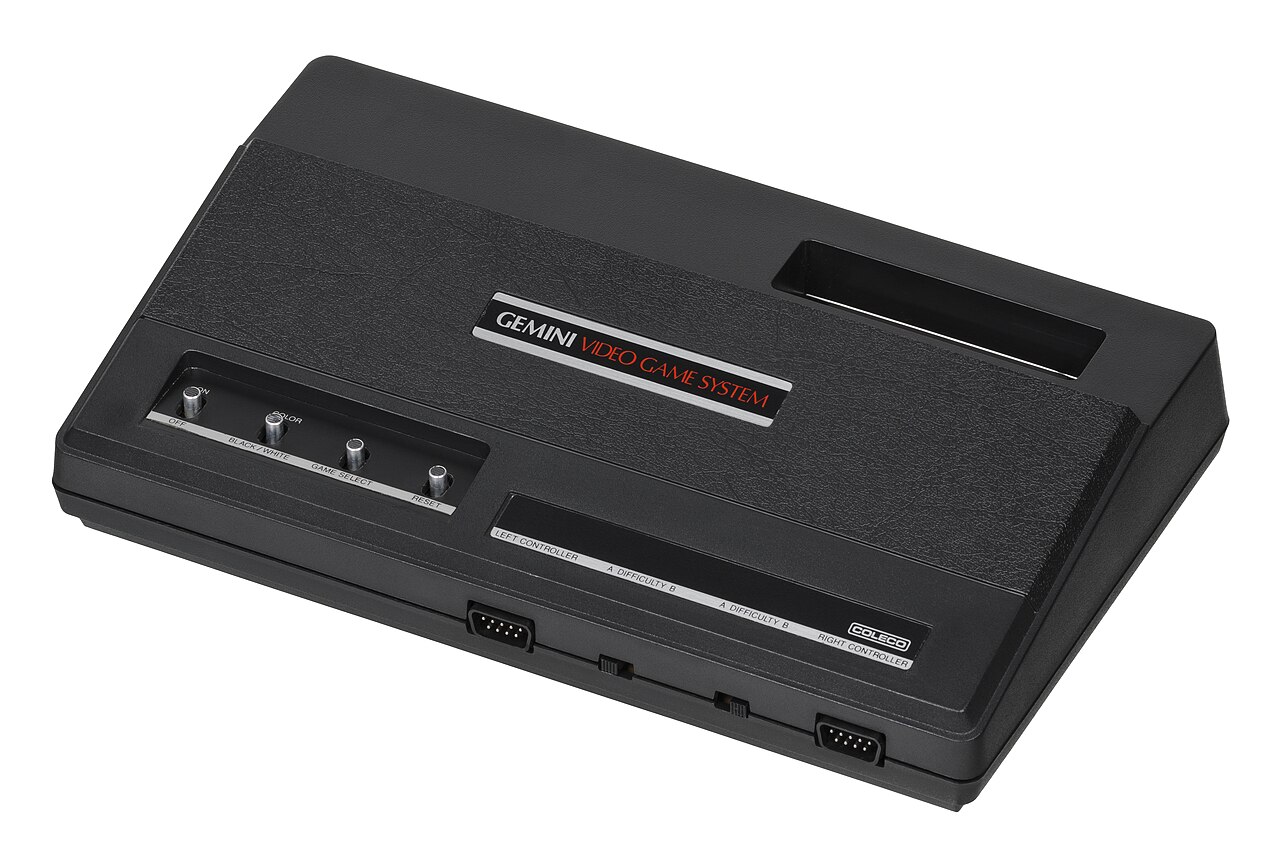
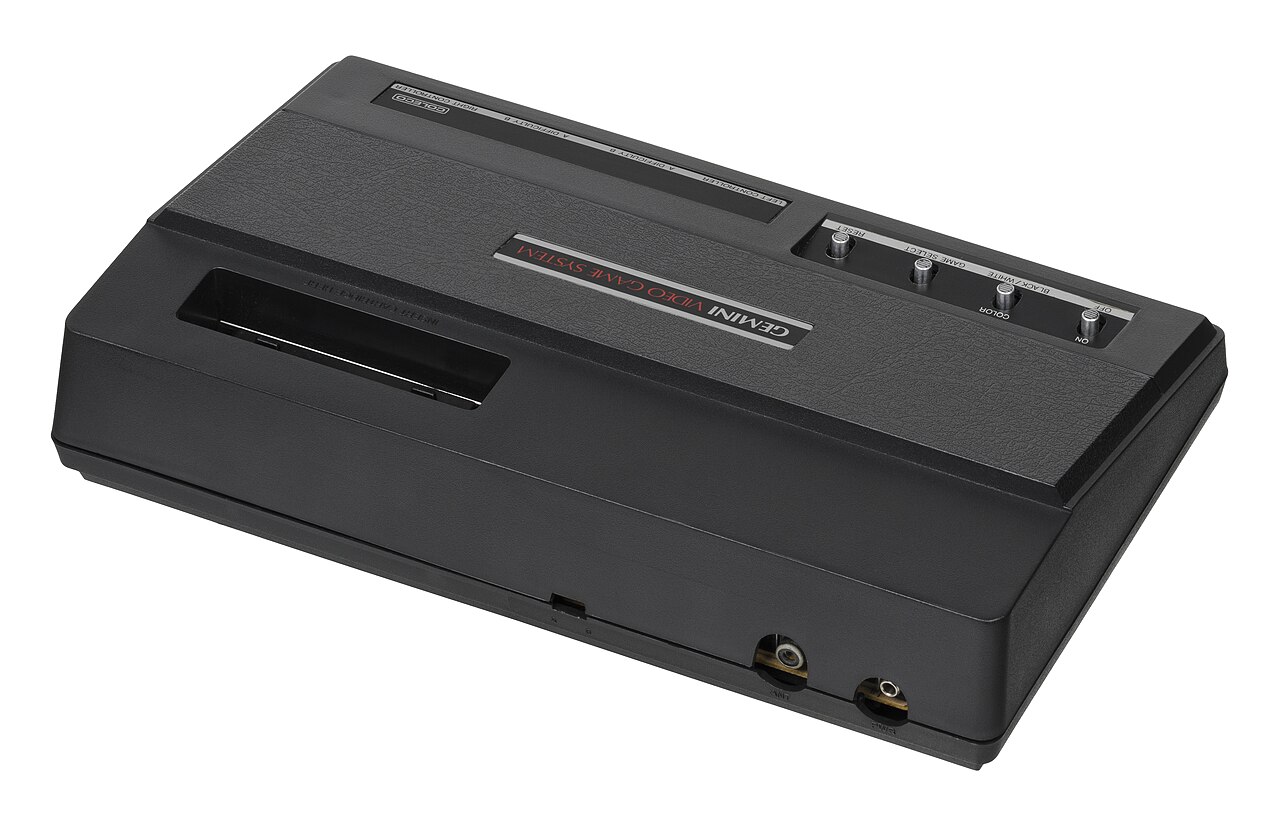
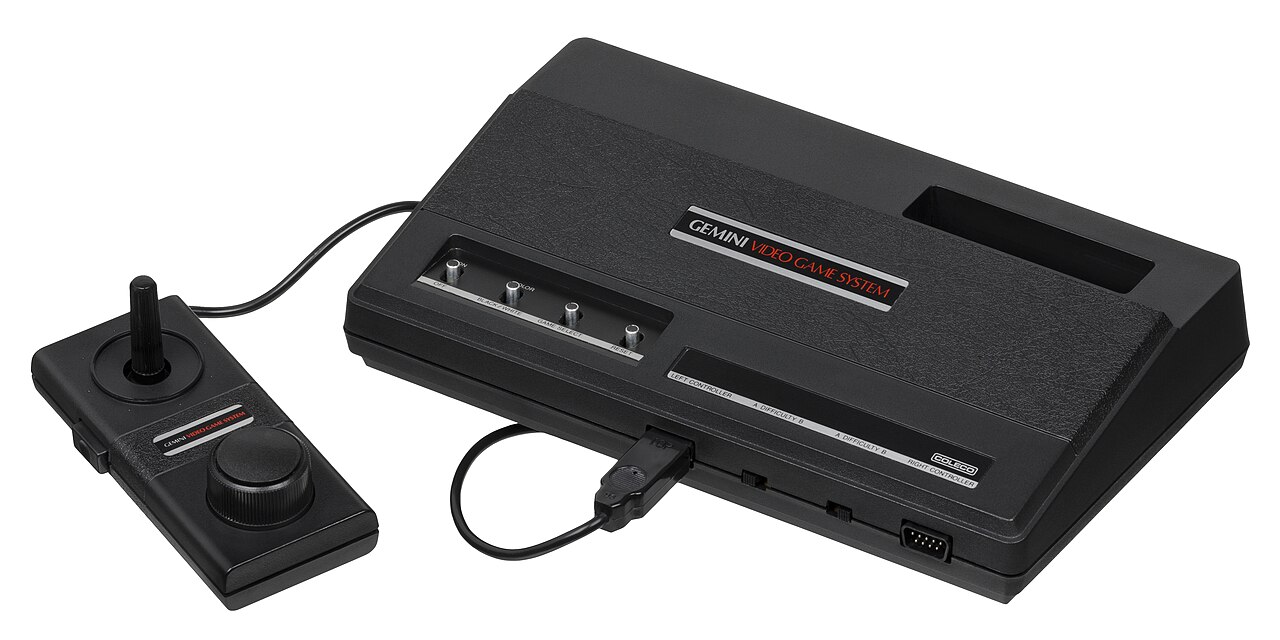
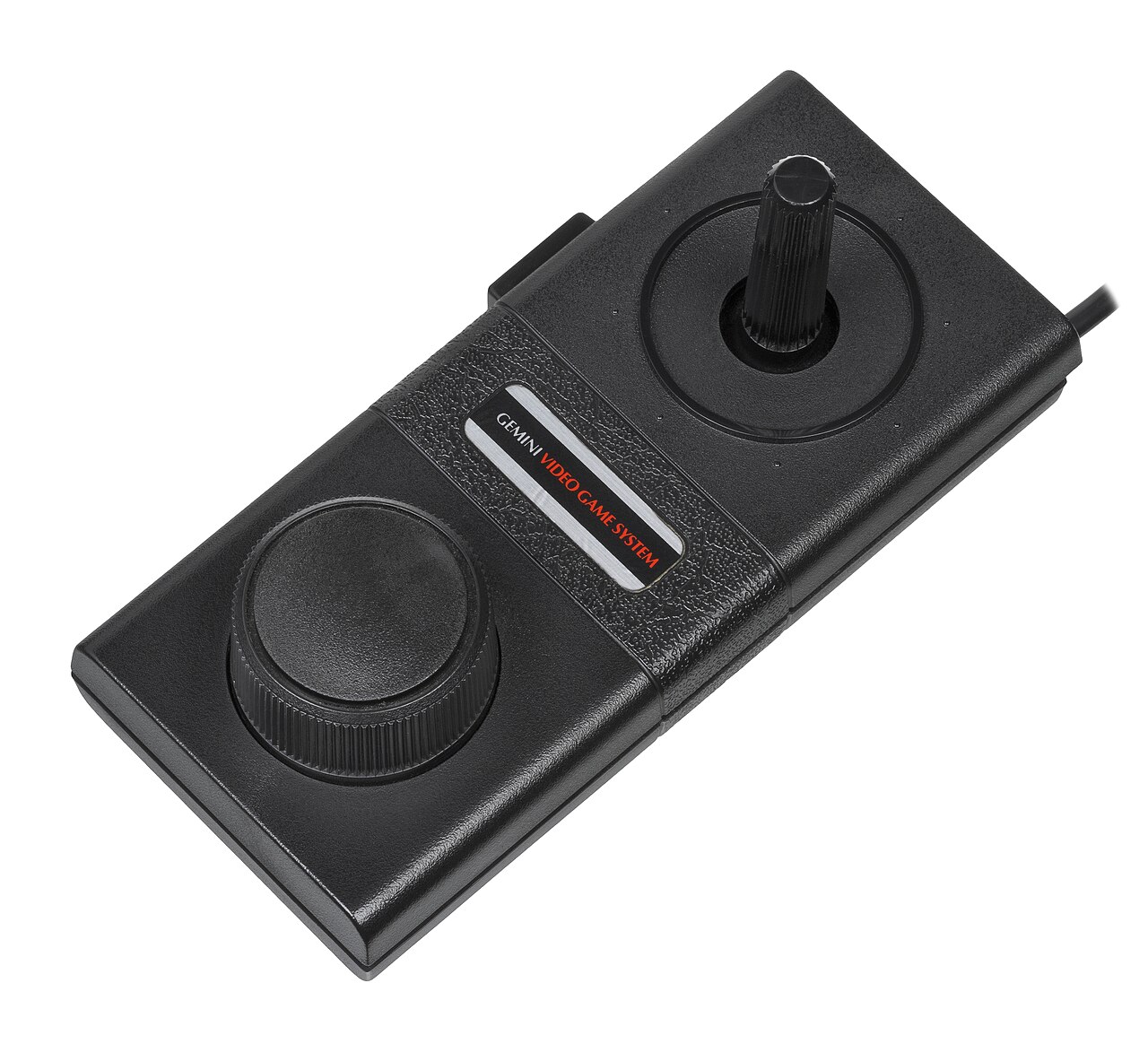
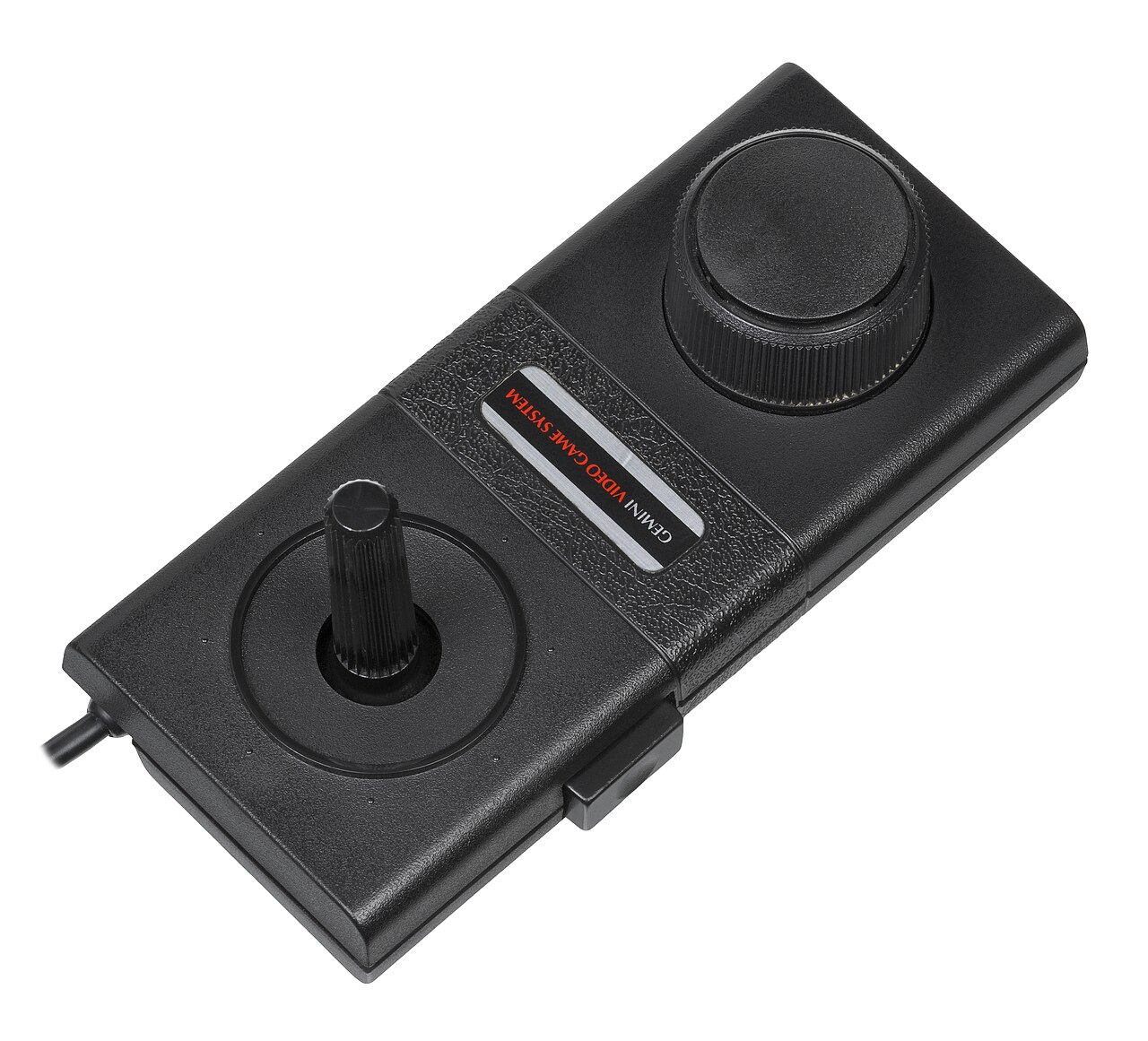
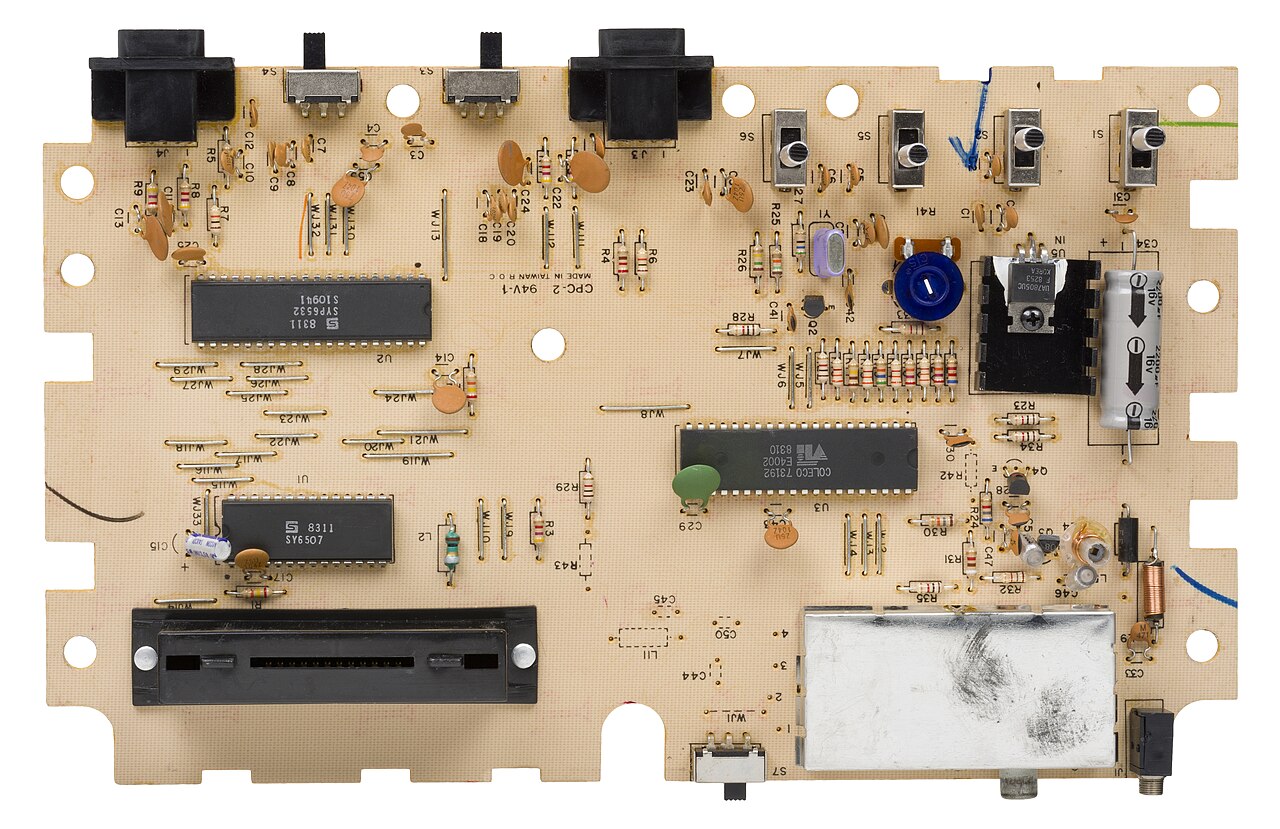
Photos: Evan Amos, public domain (Wikimedia Commons).
What's what on the Gemini
Point at (or tap) a number to see what it is.
- Cartridge slot. Takes any Atari 2600 cartridge.
- Power switch.
- TV type. Black-and-white or color, like the 2600's switch.
- Game select. Steps through each game's variations.
- Game reset. Starts the game.
- Left controller port. A standard Atari 9-pin port, so Atari joysticks and paddles work too.
- Difficulty switches. Left (A) and right (B) player difficulty, moved to the front edge.
- Right controller port.
The Dual Command controller
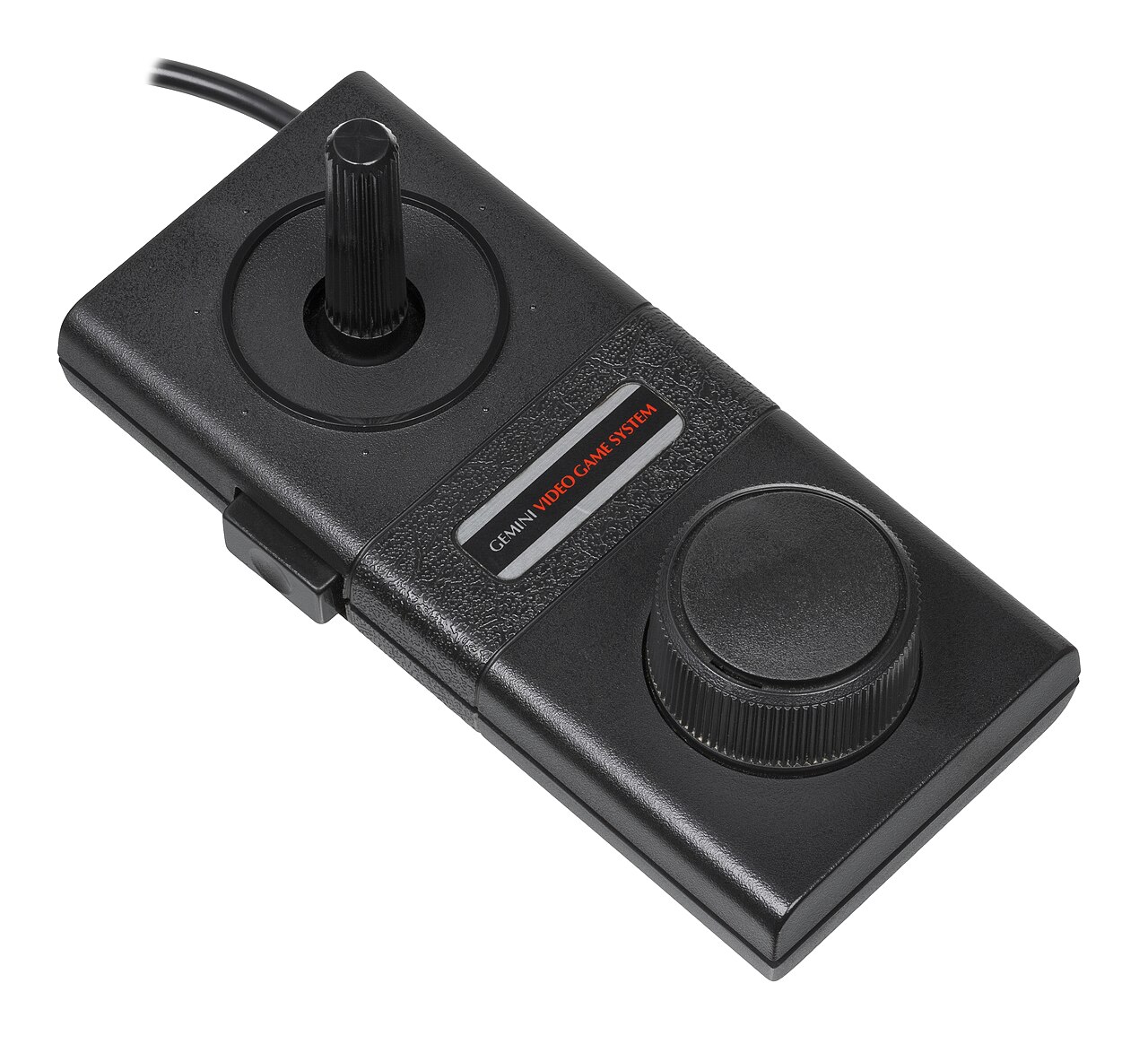
- 8-way joystick for regular 2600 games.
- Fire button on the side.
- Paddle knob. A 270-degree paddle for games like Breakout and Kaboom!, so there's no swapping controllers.
Works
- All Atari 2600 joystick games
- One-player paddle games, using the knob
- Atari's own joysticks and paddles, in the Gemini's ports
Doesn't work
- Multiplayer paddle games (3 or 4 players): use a pair of Atari paddles
- The Gemini with Expansion Module #1: they are separate products
Reviewers are split: some prefer them to Atari's controllers, others find them light and cheap. Today they're more sought after than the console.
Gemini vs Atari 2600 vs Expansion Module #1
| Coleco Gemini | Atari 2600 | Expansion Module #1 | |
|---|---|---|---|
| What it is | Stand-alone console | Stand-alone console | Add-on for the ColecoVision |
| Year | 1983 | 1977 | 1982 |
| Chips | 6507 CPU, 6532 RIOT, TIA-compatible video chip | 6507 CPU, 6532 RIOT, Atari TIA | Same Atari-compatible chips as the Gemini |
| Price, 1983 | $60 (Sears) | $60 (Sears) | — |
| Controllers | 2 Dual Command (joystick + paddle) | 2 joysticks; paddles sold separately | Uses ColecoVision or Atari controllers |
| Licensed by Atari | Yes, after March 1983 | — | Yes, after March 1983 |
| Case | Slim black | Woodgrain or black | Plugs into the front of the ColecoVision |
More on the add-on: Expansion Module #1.
Pack-ins and bundles
- Original bundle: Donkey Kong, Coleco's own 2600 version.
- Later bundles: other Coleco 2600 games, including Carnival, Mouse Trap and Front Line.
- Sears: Donkey Kong and Mouse Trap as two separate cartridges.
Against Atari's own 2600 bundle of the time, the Gemini offered two Coleco arcade games in the box and no mail-in rebate. Coleco also made the ColecoVision versions of these games: Donkey Kong, Mouse Trap, Carnival and Front Line.
Collector's corner
- Value: rarer than an Atari 2600 but in less demand, so cheaper: a tested, working Gemini typically sells for around $30, a broken one for $10 to $15.
- Look for: working controllers, which are more sought after than the console, and the Columbia Home Arcade version.
- Common faults: cracked solder joints on the controller ports and the TV output. Usually a simple re-solder.