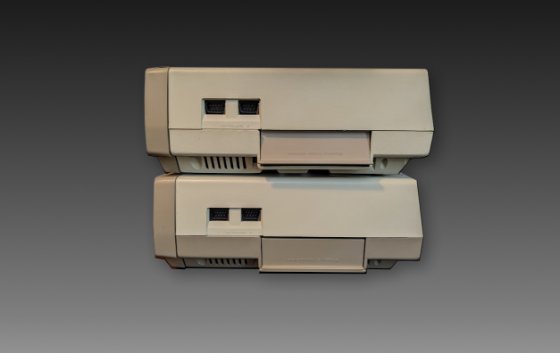
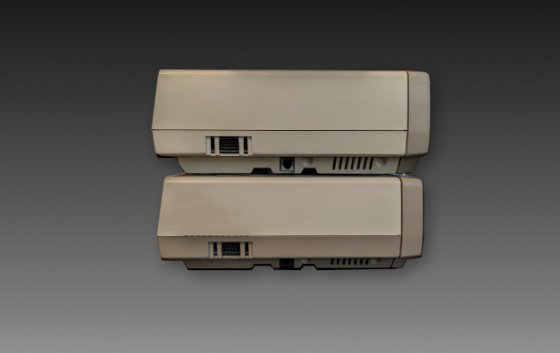
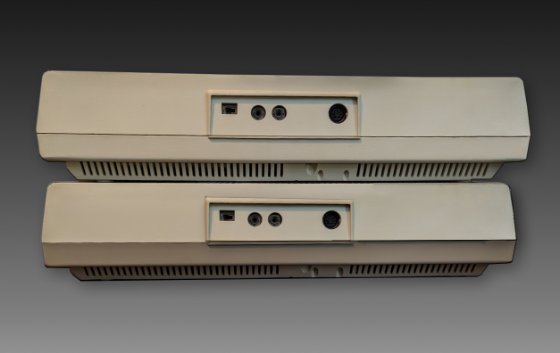
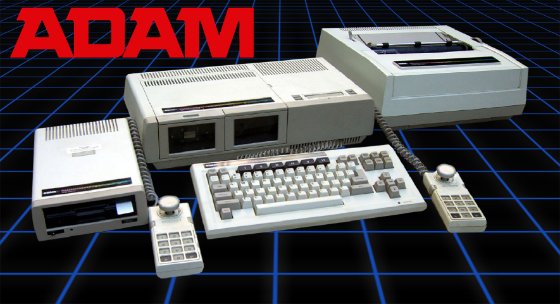
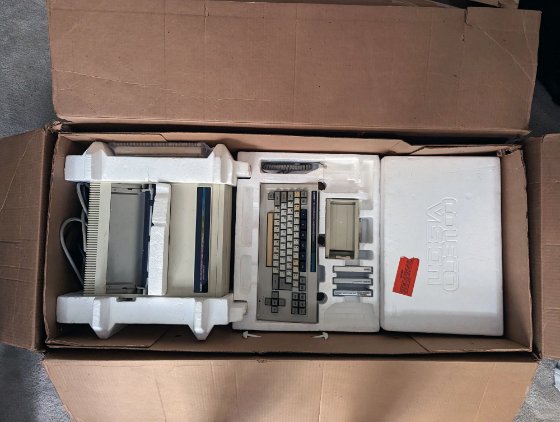
What's what
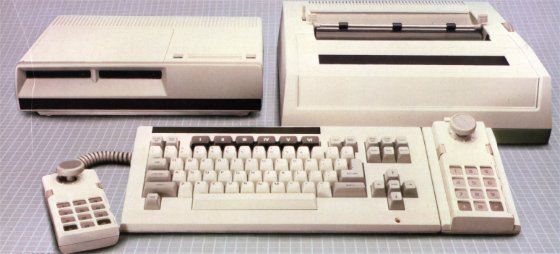
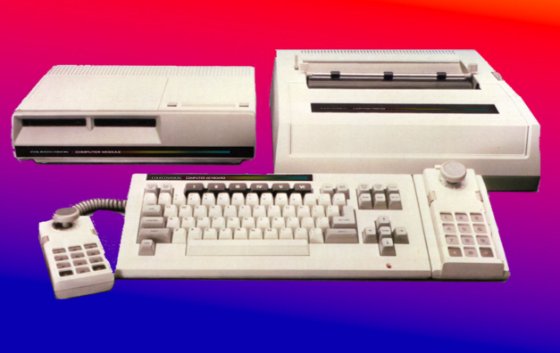
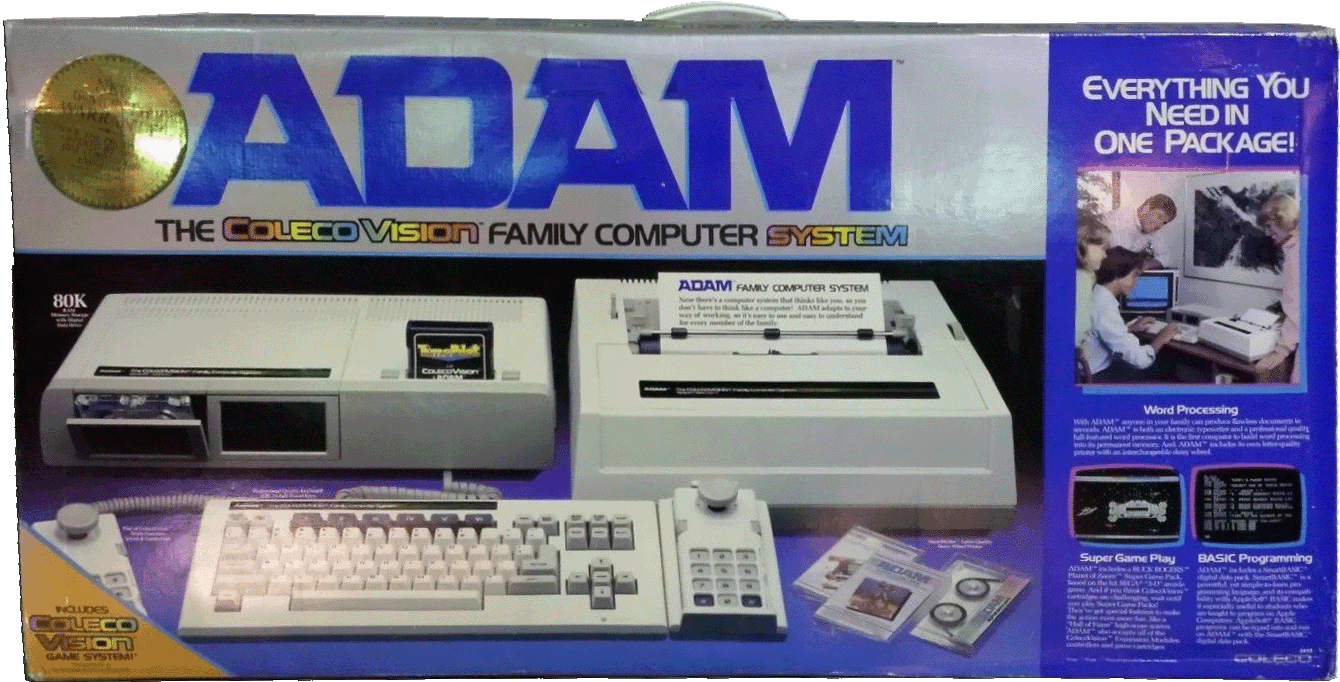
Point at (or tap) a number to see what it is.
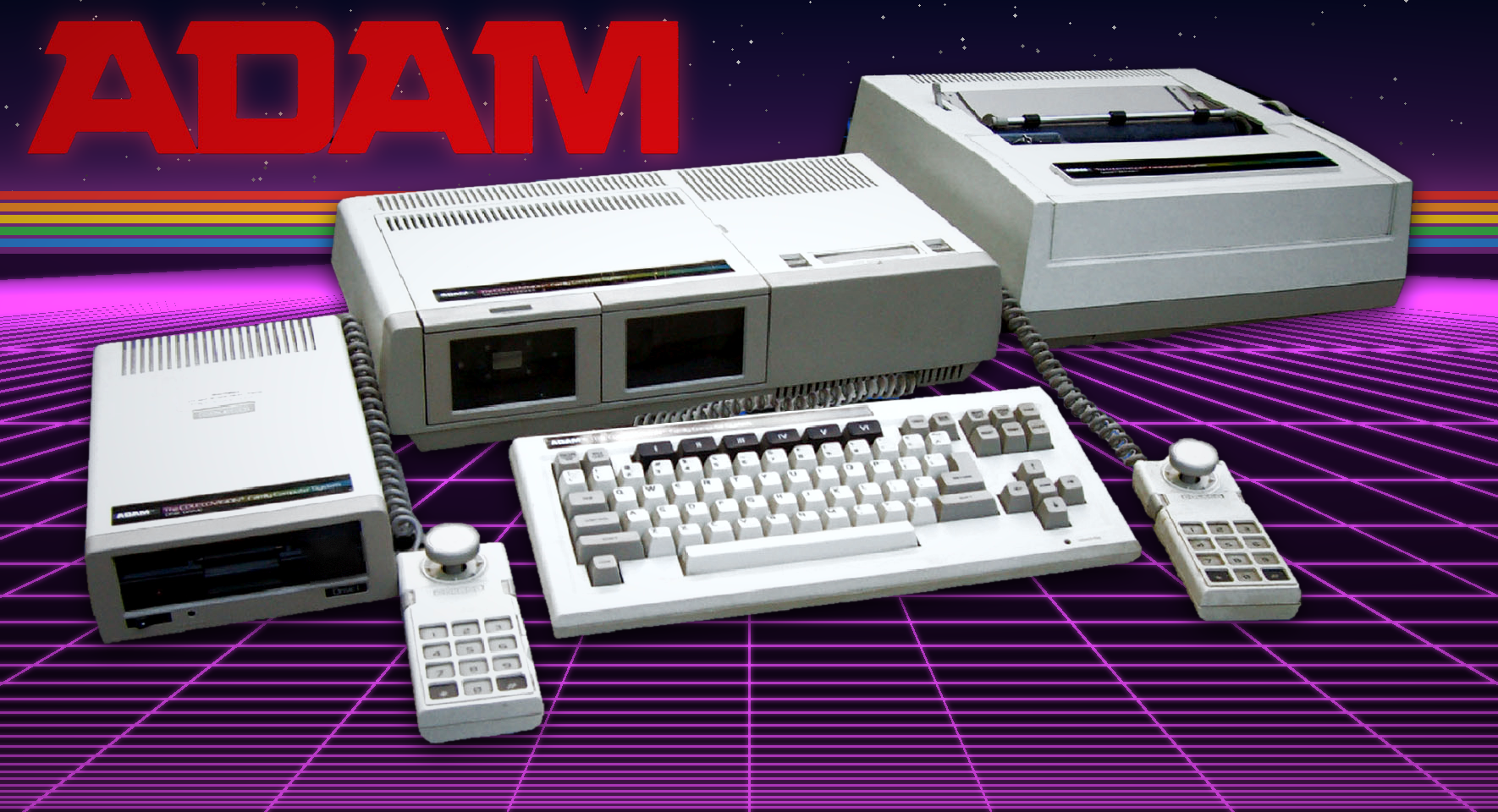
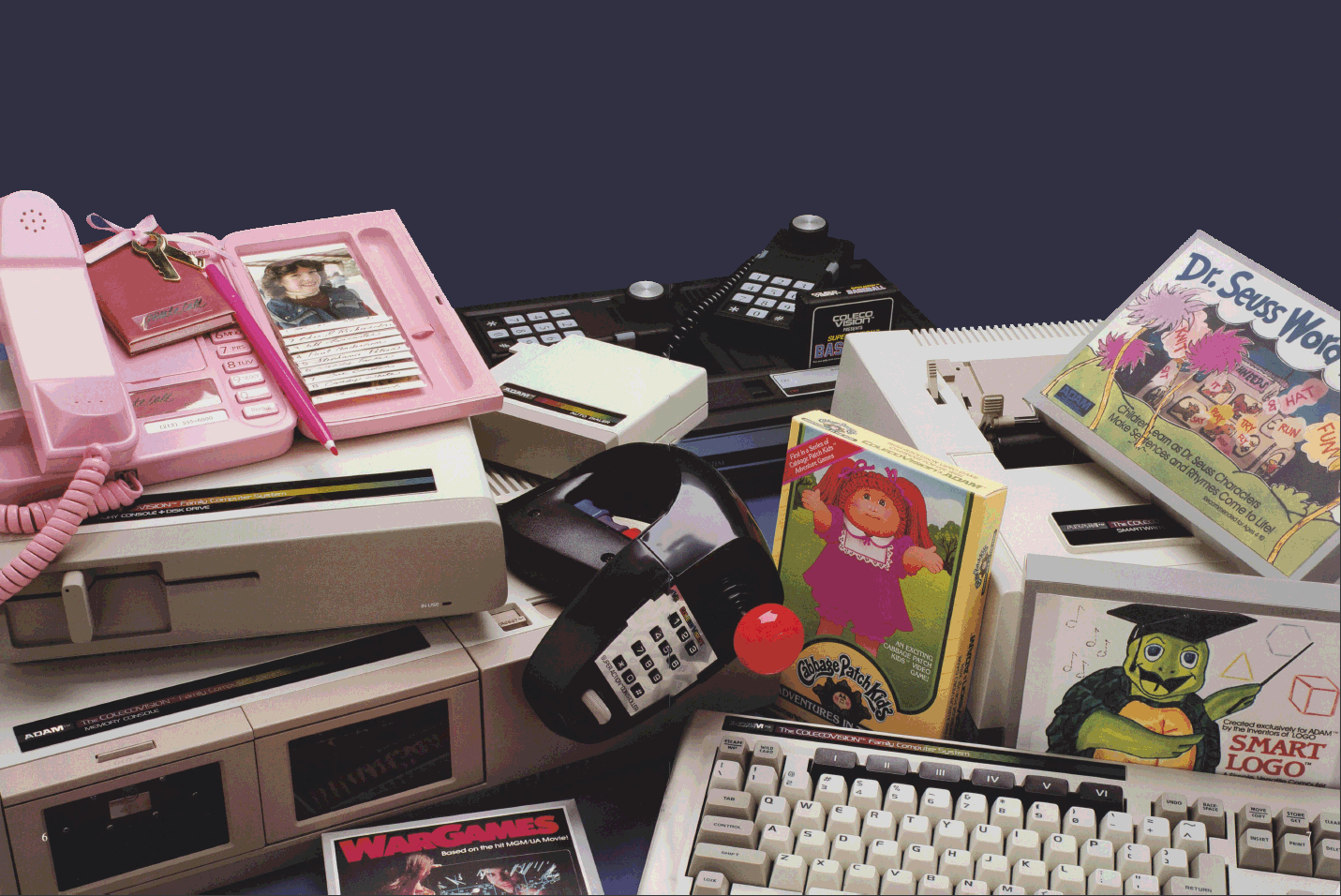
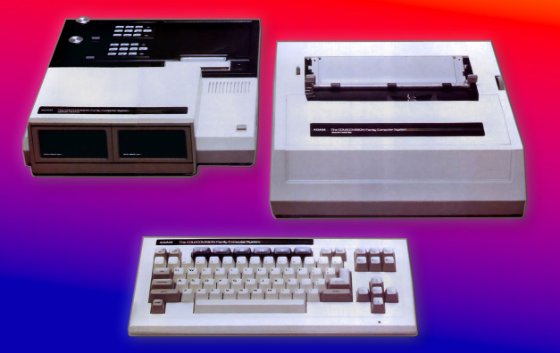
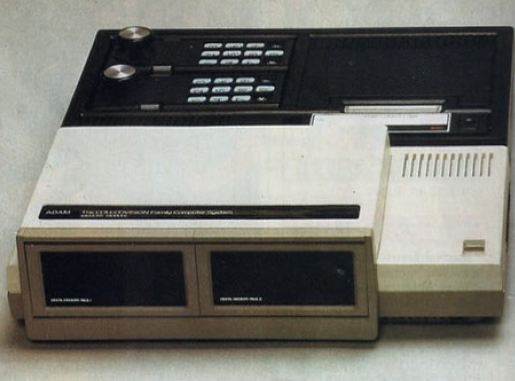
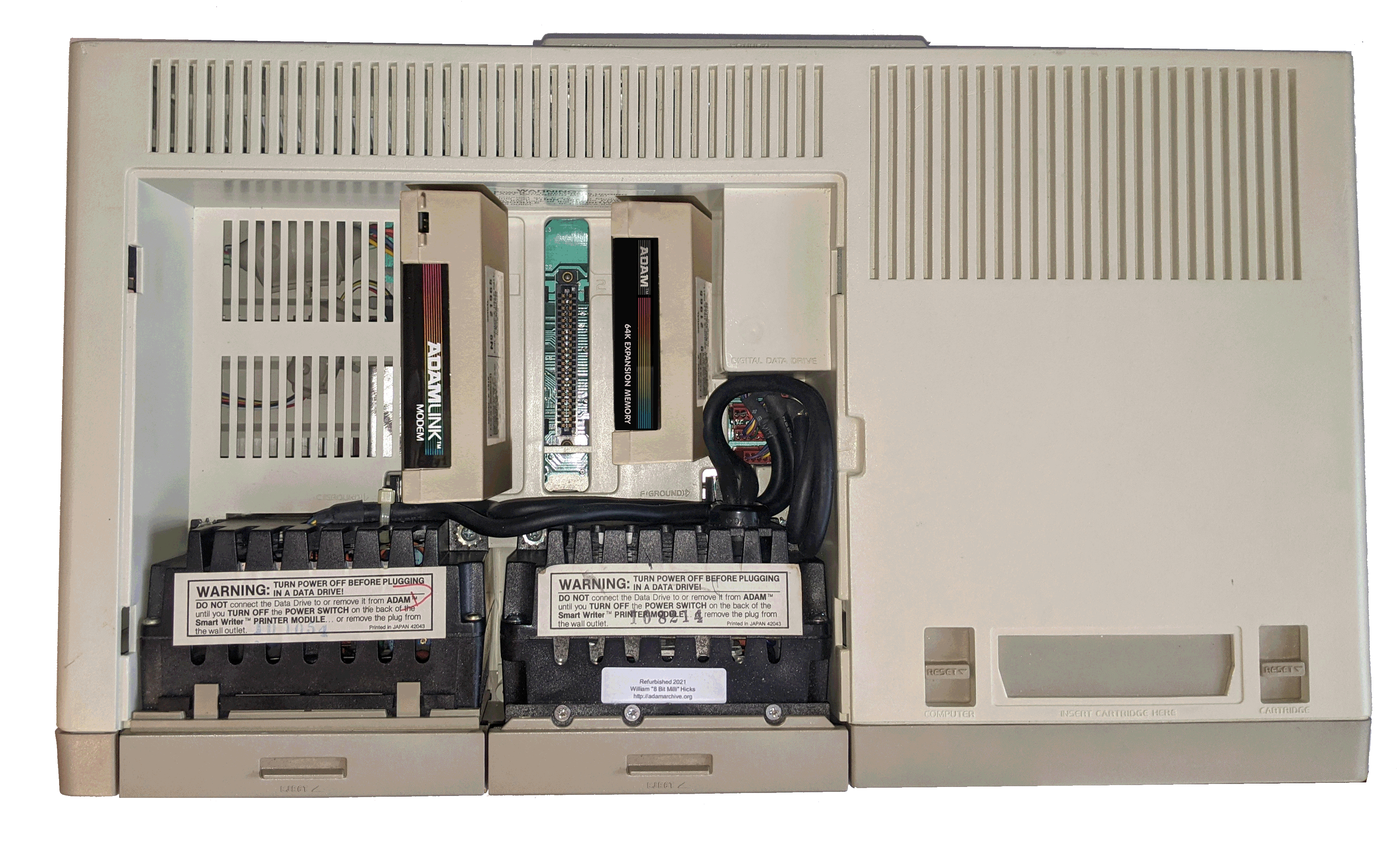
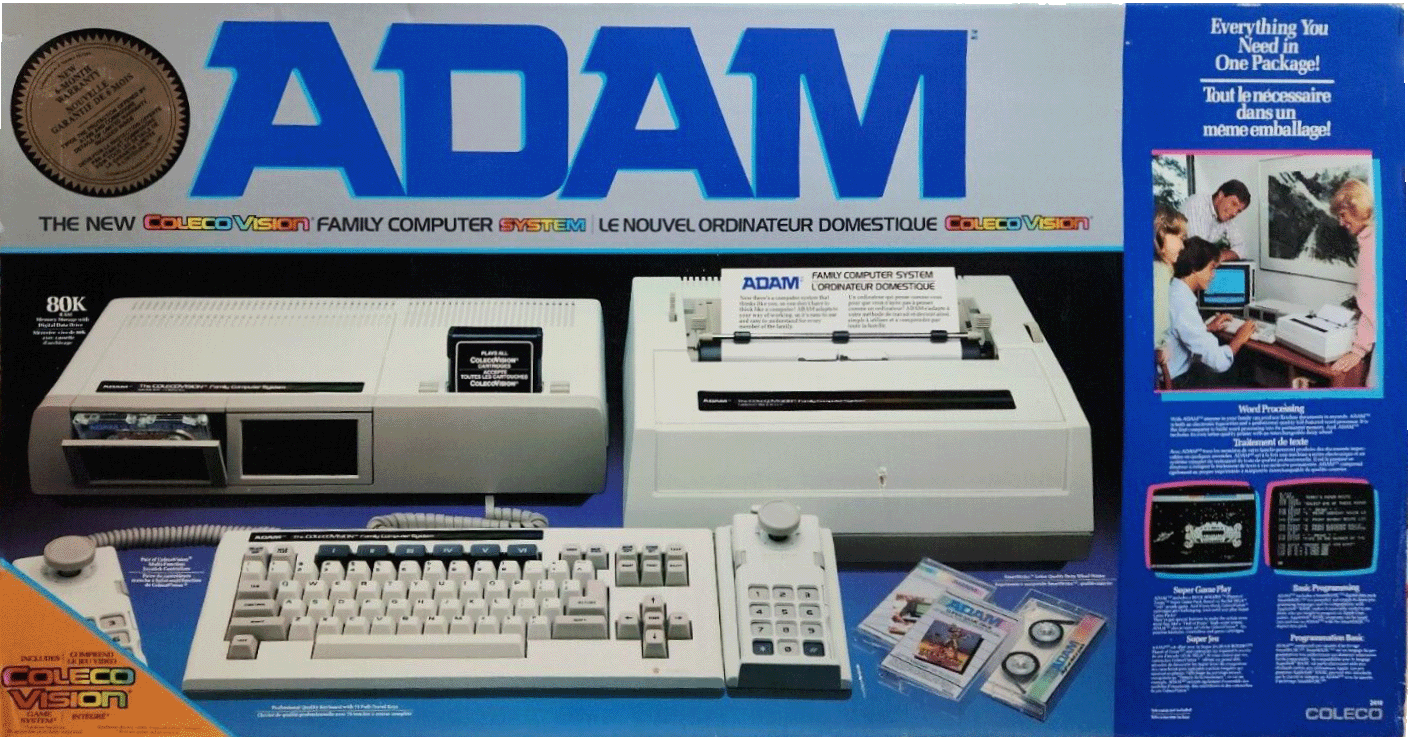
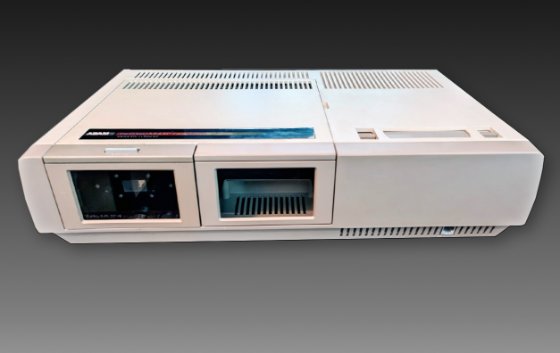
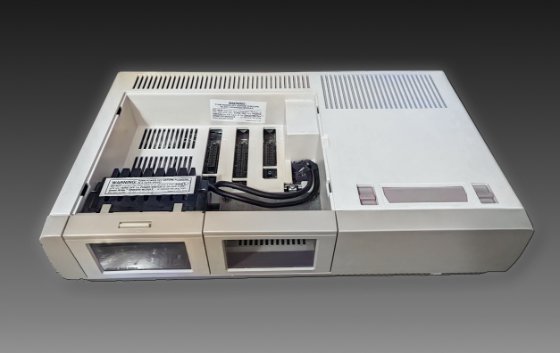
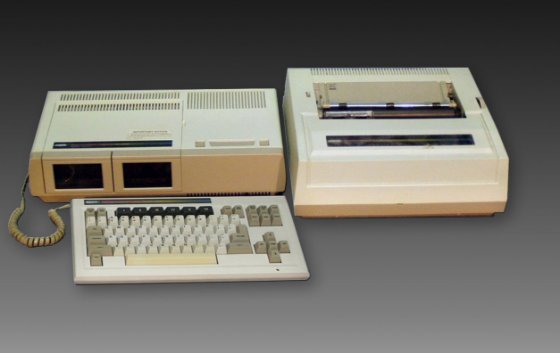
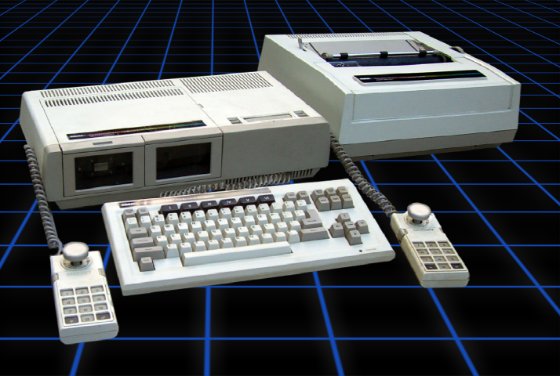
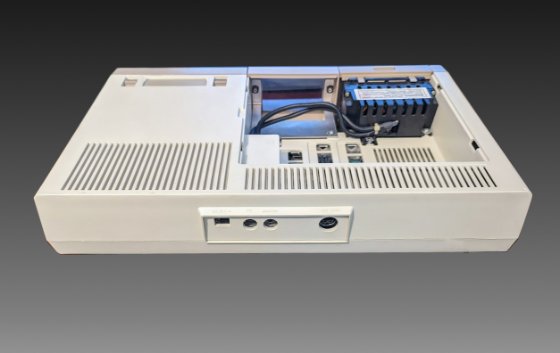
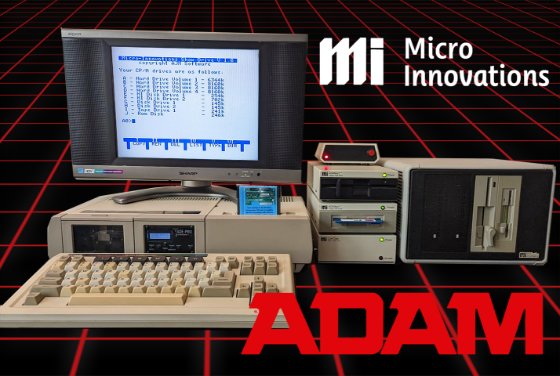
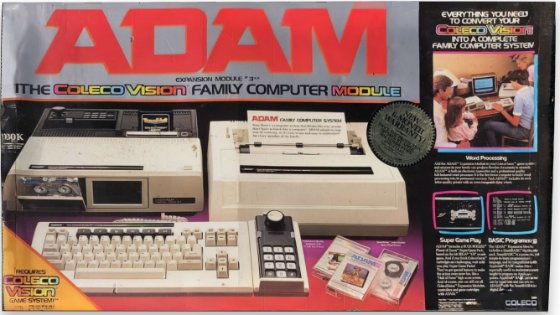
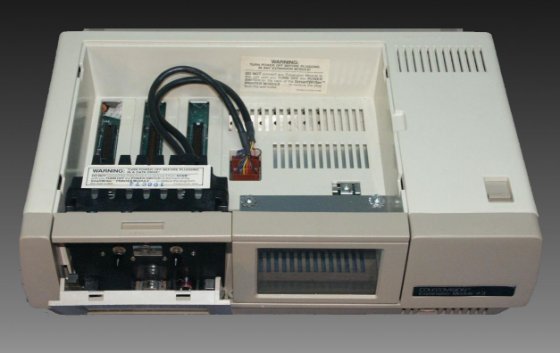
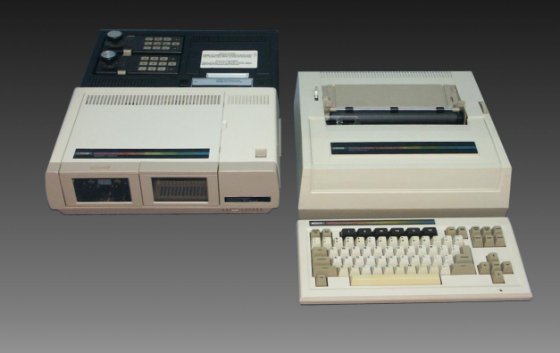
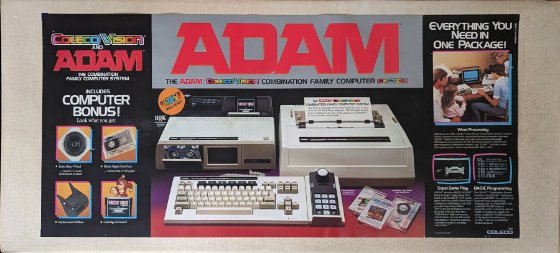
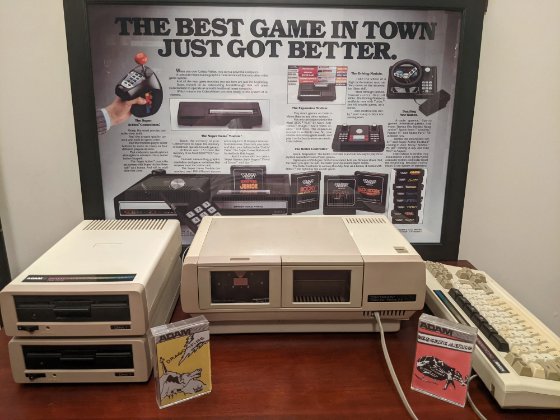
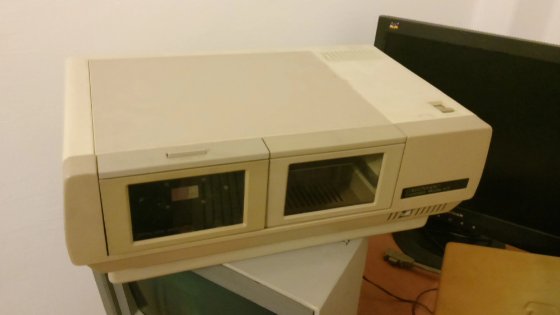
- Memory console. The computer itself: Z80A, 64 KB RAM, video and sound chips, cartridge slot and three internal expansion slots.
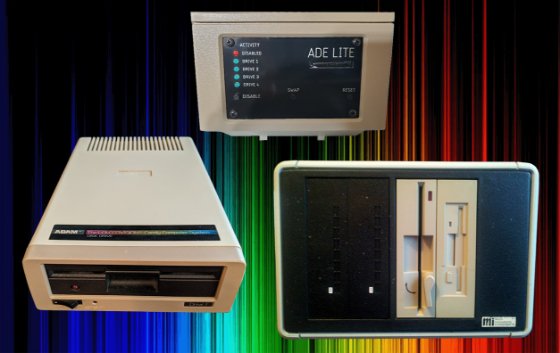
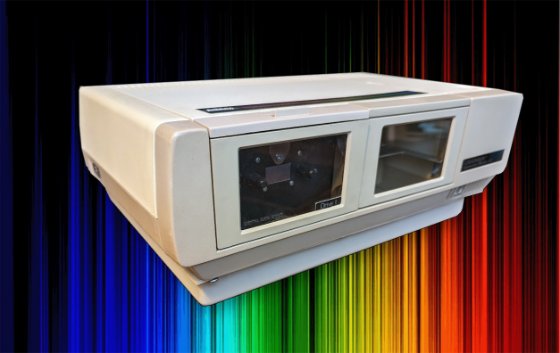
- Digital Data Pack drives. One drive came standard; the second bay takes an extra drive.
- SmartPrinter. Daisy-wheel, letter-quality, and home of the power supply for the whole system.
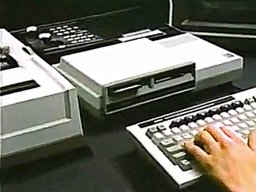
- Keyboard. Full-travel keys, six "smart keys" and a separate cursor cluster; its own ADAMnet controller.
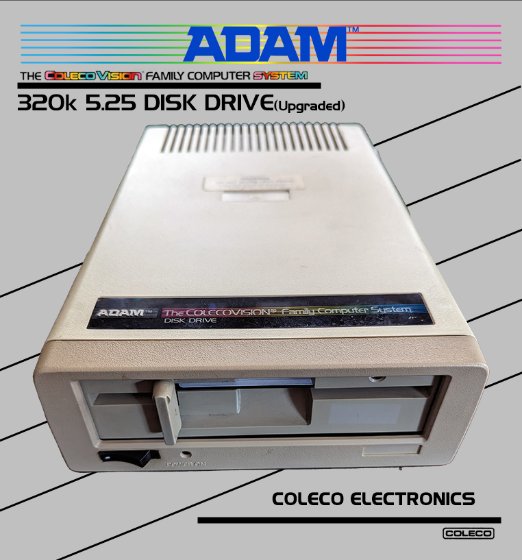
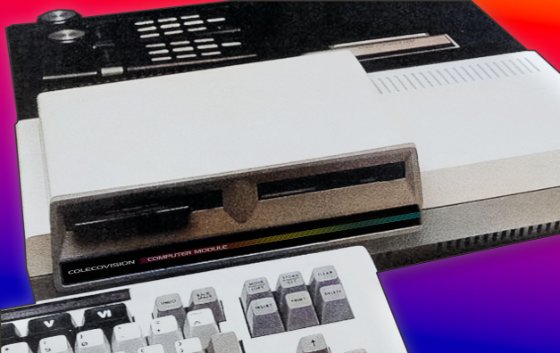
- 5.25-inch disk drive. Coleco's optional 160 KB floppy drive, which plugs into ADAMnet.
- Controller. A ColecoVision-style hand controller; the ADAM plays every ColecoVision cartridge.
Specifications
The stand-alone ADAM's main specifications, as given by collector references.
| Component | Specification |
|---|---|
| CPU | Zilog Z80A at about 3.58 MHz |
| RAM | 64 KB main RAM, expandable with Coleco's 64K Memory Expander (more with later cards) |
| Video RAM | 16 KB, dedicated to the video chip (80 KB of RAM in total) |
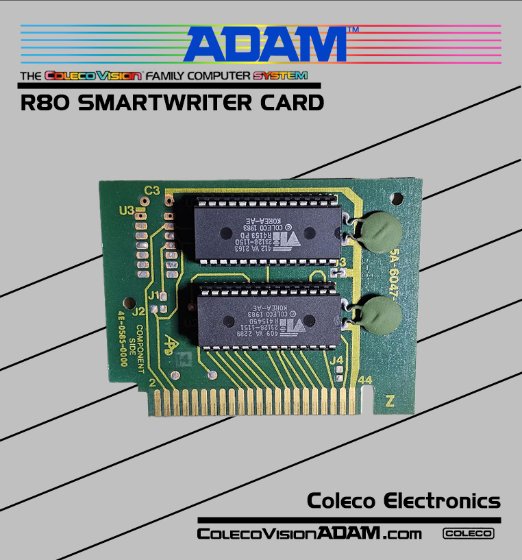
| ROM | About 32 KB of system ROM (EOS + SmartWriter) plus the 8 KB ColecoVision OS-7 ROM |
| Video | Texas Instruments TMS9928A: 256 × 192 pixels, 15 colors, 32 sprites (4 per line) |
| Sound | Texas Instruments SN76489AN: 3 tone voices plus noise |
| Peripheral bus | ADAMnet, a half-duplex serial network at 62.5 kbit/s |
| Support processors | Motorola 6801-family microcontrollers in the console and peripherals |
| Mass storage | Built-in Digital Data Pack drive (room for a second), 256 KB per tape |
| Printer | SmartPrinter daisy-wheel; houses the system power supply |
| Expansion | 3 internal card slots, ColecoVision cartridge slot, ColecoVision-type expansion port |
The memory console
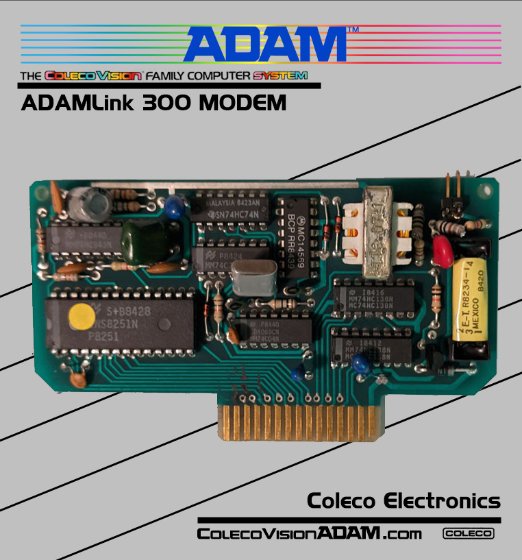
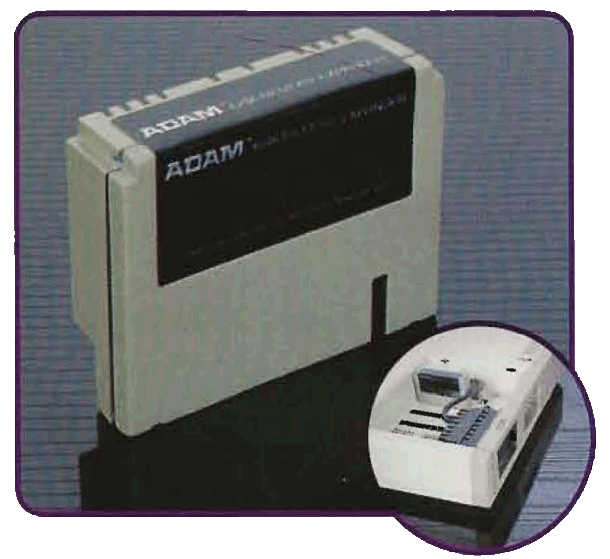
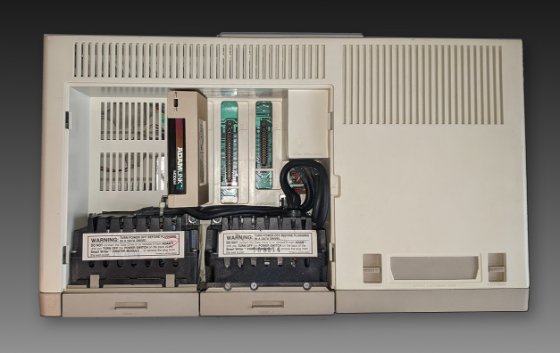
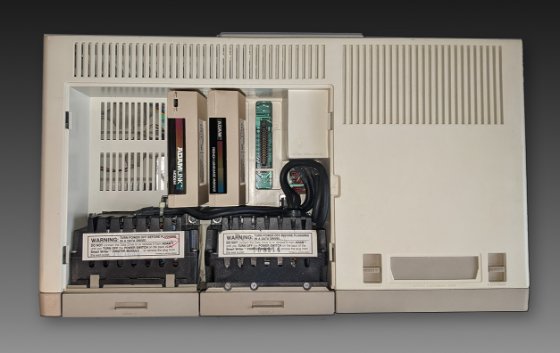
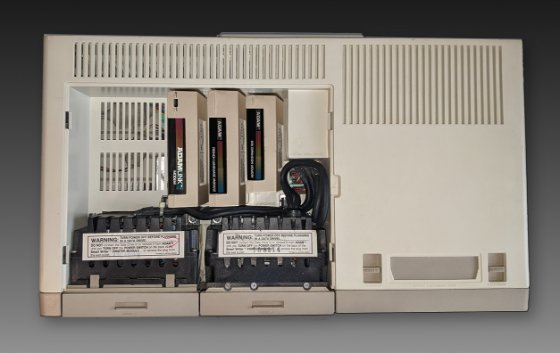
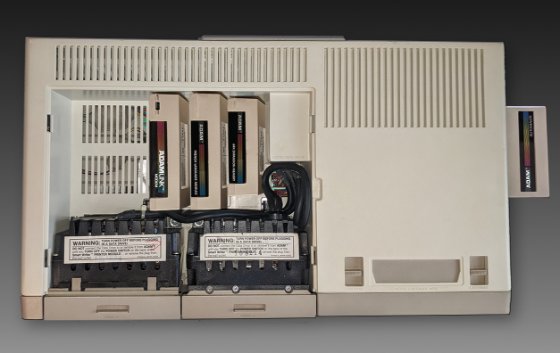
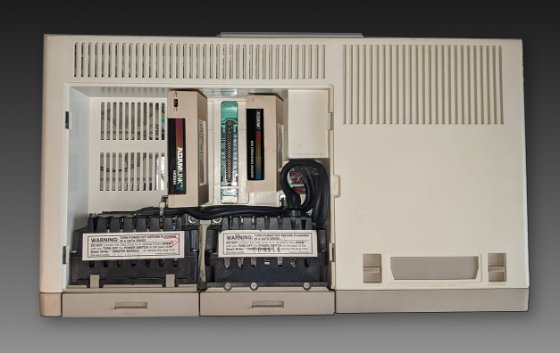
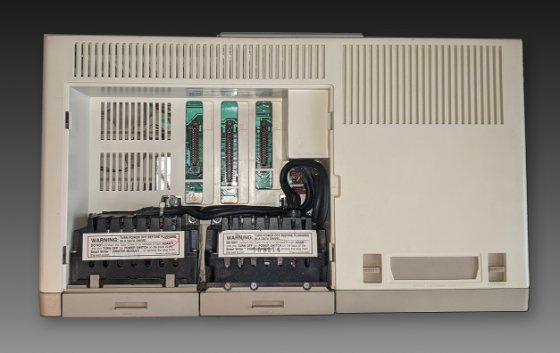
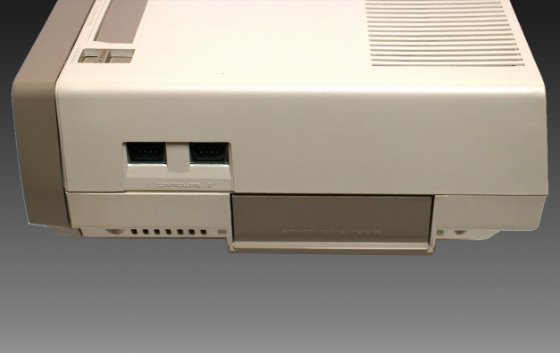
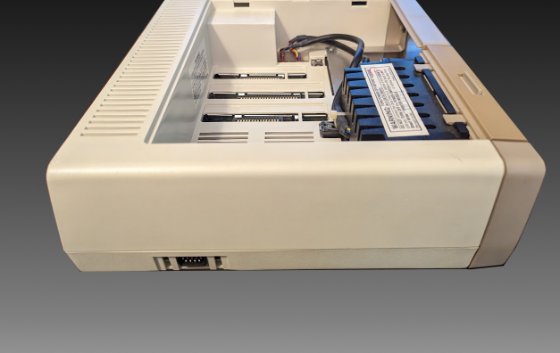
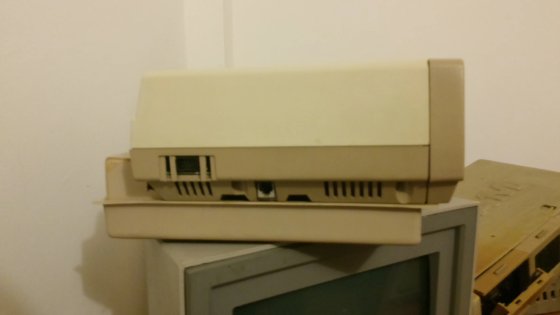
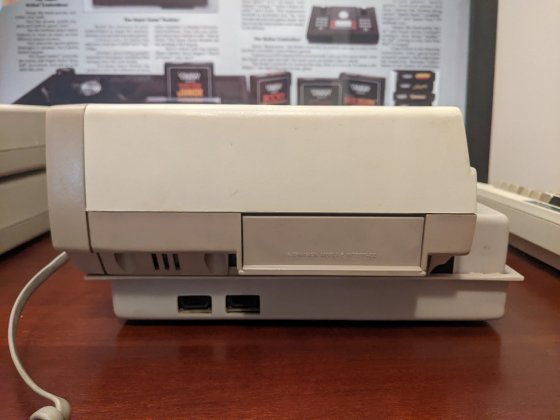
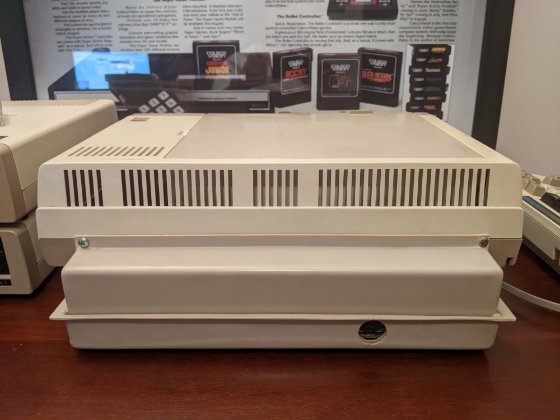
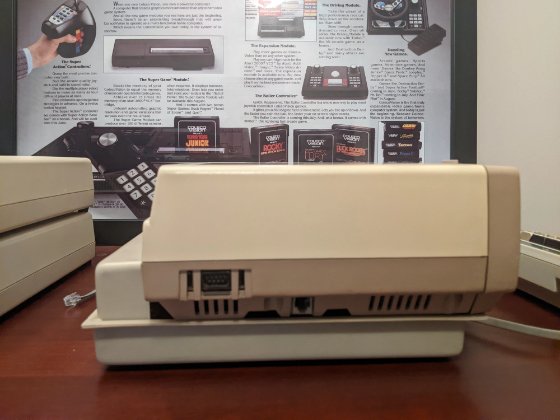
The main unit is called the memory console. Besides the Z80A, RAM and video and sound chips, it holds a slot for ColecoVision cartridges, two controller ports and the data drive bay. A hinged door on top covers three internal expansion slots: the modem goes in slot 1, and the 64K Memory Expander and other cards in the others. Video went to a TV through an RF modulator; the stand-alone console also had a direct video output for a monitor.
Because it uses the same CPU, video chip and sound chip as the ColecoVision, the ADAM runs ColecoVision cartridges natively, and it includes the console's OS-7 ROM for that purpose.
ROM software: EOS and SmartWriter
Switch on an ADAM with no tape, disk or cartridge loaded and it starts straight into SmartWriter, a word processor stored in ROM. SmartWriter starts as an "electronic typewriter" that prints each line as you type, and can switch to a full-screen editing mode. Underneath is EOS, the Elementary Operating System: a ROM library of routines for ADAMnet devices and files, used by SmartBASIC and most native ADAM software.
ADAMnet: a network on your desk
ADAMnet is the most unusual part of the ADAM. The keyboard, tape drives and printer were not wired straight to the Z80. Each sat on a shared serial bus running at 62.5 kbit/s with its own Motorola 6801 microcontroller. The Z80 sent requests over the bus and the peripheral controllers did the low-level work, closer to a small local network than a typical 1983 home computer. The design allowed for up to 15 devices.
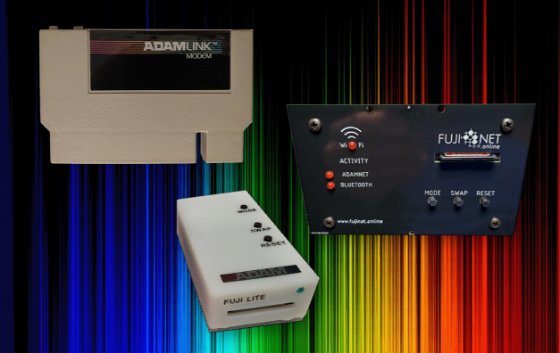
That is why the keyboard and printer connect by simple cables, and why later add-ons, from disk drives to modern devices like FujiNet, plug straight into ADAMnet. One catch: the 6801s' code is in mask ROM inside the chips, so a failed controller cannot just be reprogrammed, but enthusiasts have used the erasable 68701 as a replacement.
Digital Data Packs
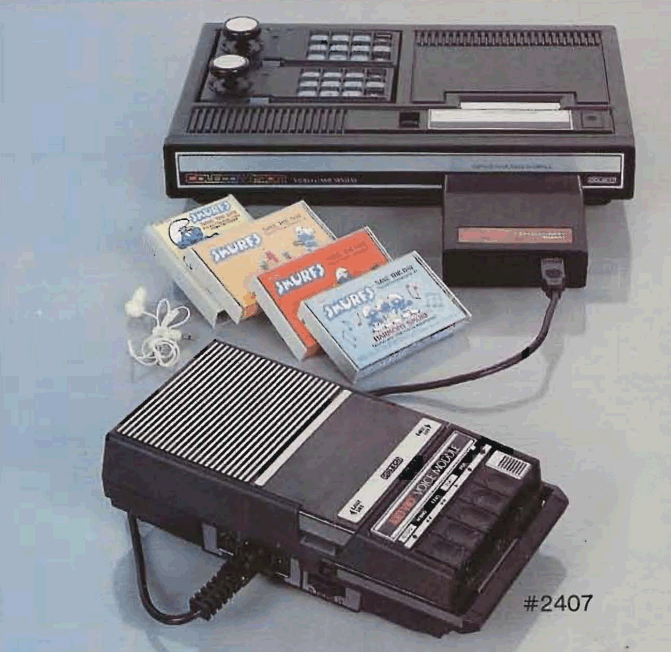
Instead of floppy disks, the ADAM shipped with Digital Data Pack drives. They used a high-speed cassette-style cartridge that the computer treated like a random-access block device. Each pack holds about 256 KB. The drive ran the tape at about 20 inches per second, far quicker than ordinary cassette storage, though slower than a floppy disk.
Packs are known for wear: stretched or loose tape, failing drive belts and the power-on surge described on the History page. Remove packs before switching the system on or off, and make digital images of important tapes.
Keyboard
Reviewers who disliked other parts of the ADAM still praised the keyboard: a full-size, full-travel design with a typewriter feel, a separate cursor cluster with a Home key, and a row of "smart keys" whose meaning changes with the program. It connects to the memory console by a coiled cable and has its own ADAMnet microcontroller.
The SmartPrinter and the power supply
The SmartPrinter is a daisy-wheel, letter-quality printer that uses interchangeable print wheels and a Selectric-compatible ribbon. It prints at about 10 characters per second, so it is slow and very loud, but its output looked like proper typing, a big selling point for school and office work.
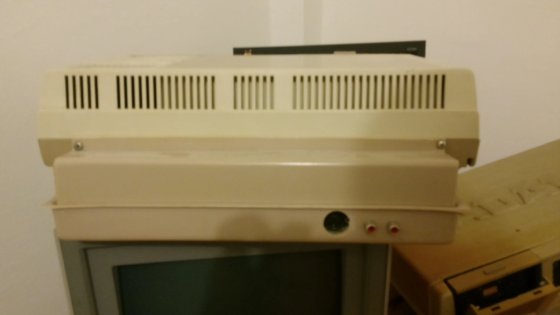
The printer also contains the whole system's power supply. Both versions of the ADAM draw power through the printer cable, so if the printer is missing or broken the computer will not start. A modern replacement supply is a common upgrade.
Stand-alone ADAM vs. Expansion Module #3
| Stand-alone ADAM | Expansion Module #3 | |
|---|---|---|
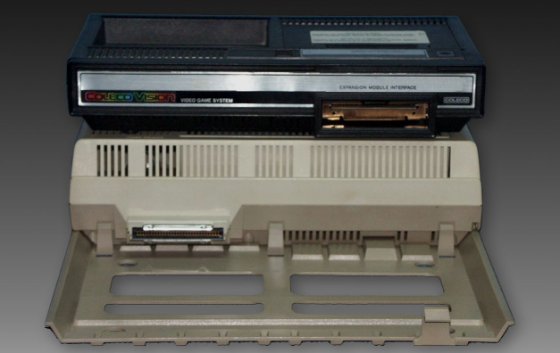
| Needs a ColecoVision? | No | Yes: plugs into the console's front expansion port |
| Processor, video, sound | Its own Z80A, TMS9928A and SN76489AN | Borrowed from the ColecoVision |
| Cartridge slot | On the memory console | Uses the ColecoVision's slot |
| Keyboard, tape drive, printer, SmartWriter | Yes | Yes, the same parts |
| Runs ADAM software and CV cartridges | Yes | Yes |
| Announced price (June 1983) | About $600 | $400 |
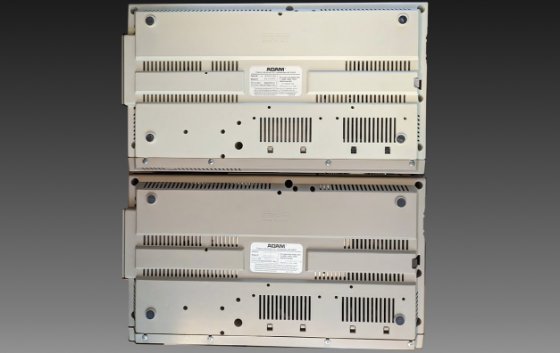
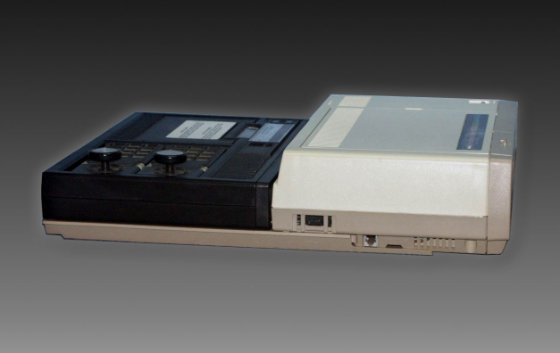
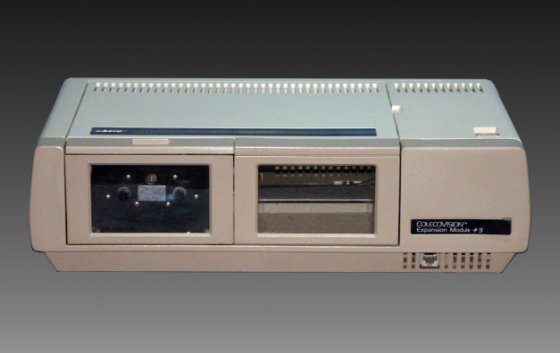
| How to spot it | Stand-alone memory console with its own controller ports | Memory console with a connector that mates with the front of a ColecoVision; the two sit side by side |
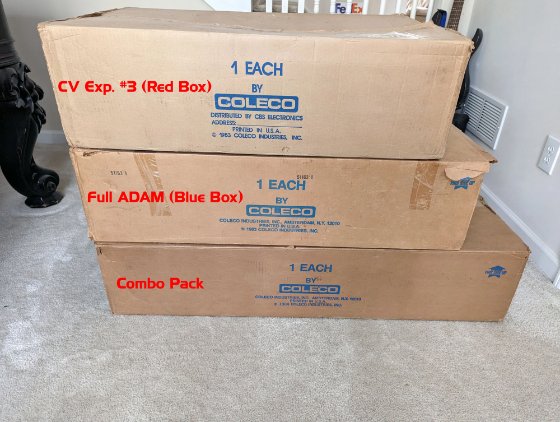
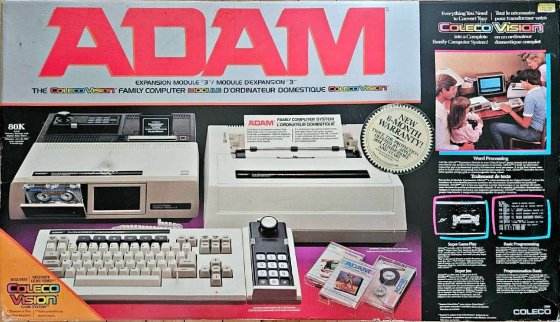
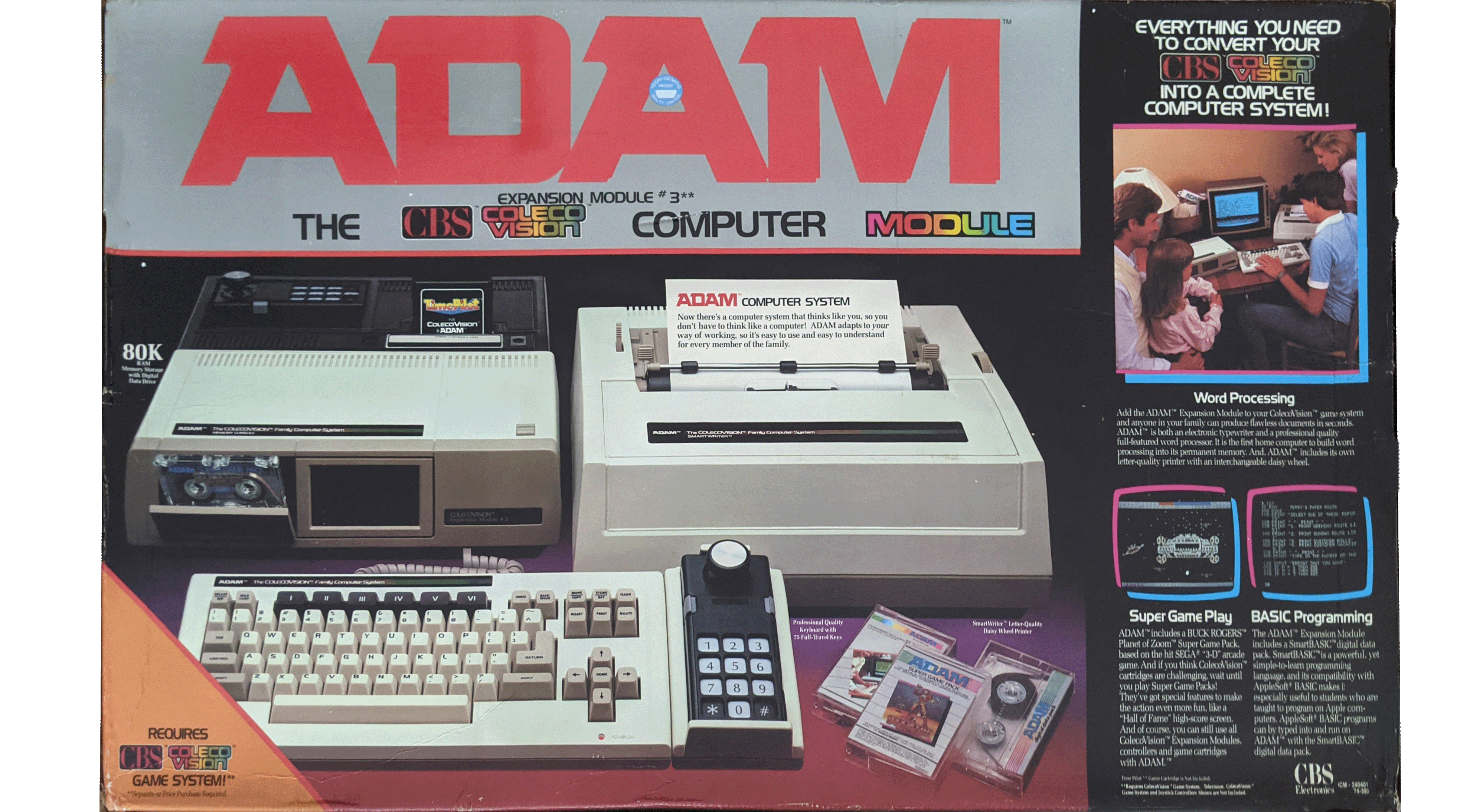
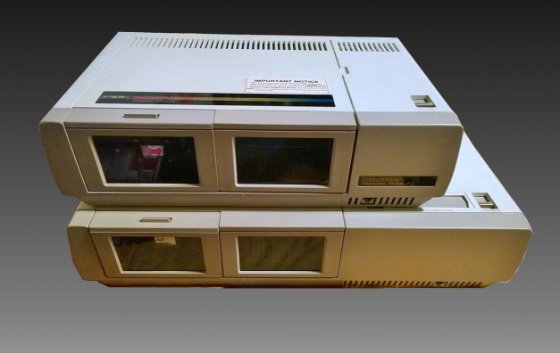
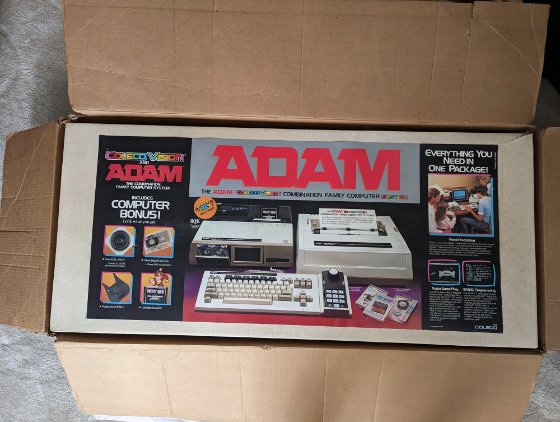
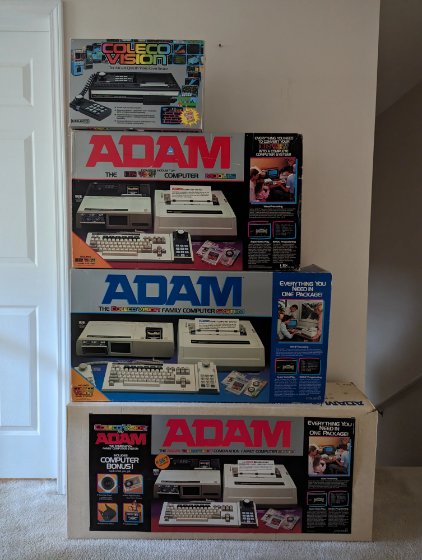
More on the add-on version, with box photos, is on the Expansion Module #3 page. How rare each boxed version really is has not been documented, though boxed Module #3 sets are generally seen less often.
Collect
Track the ones you own in your collection.
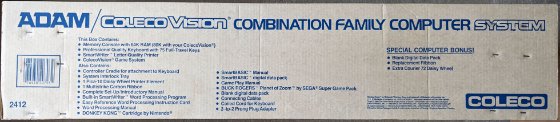
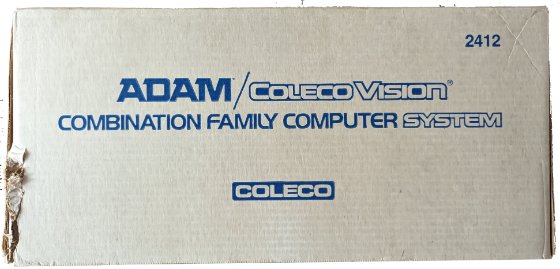
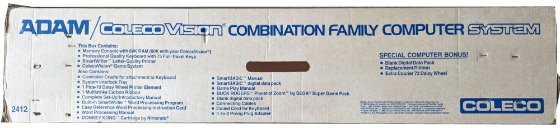
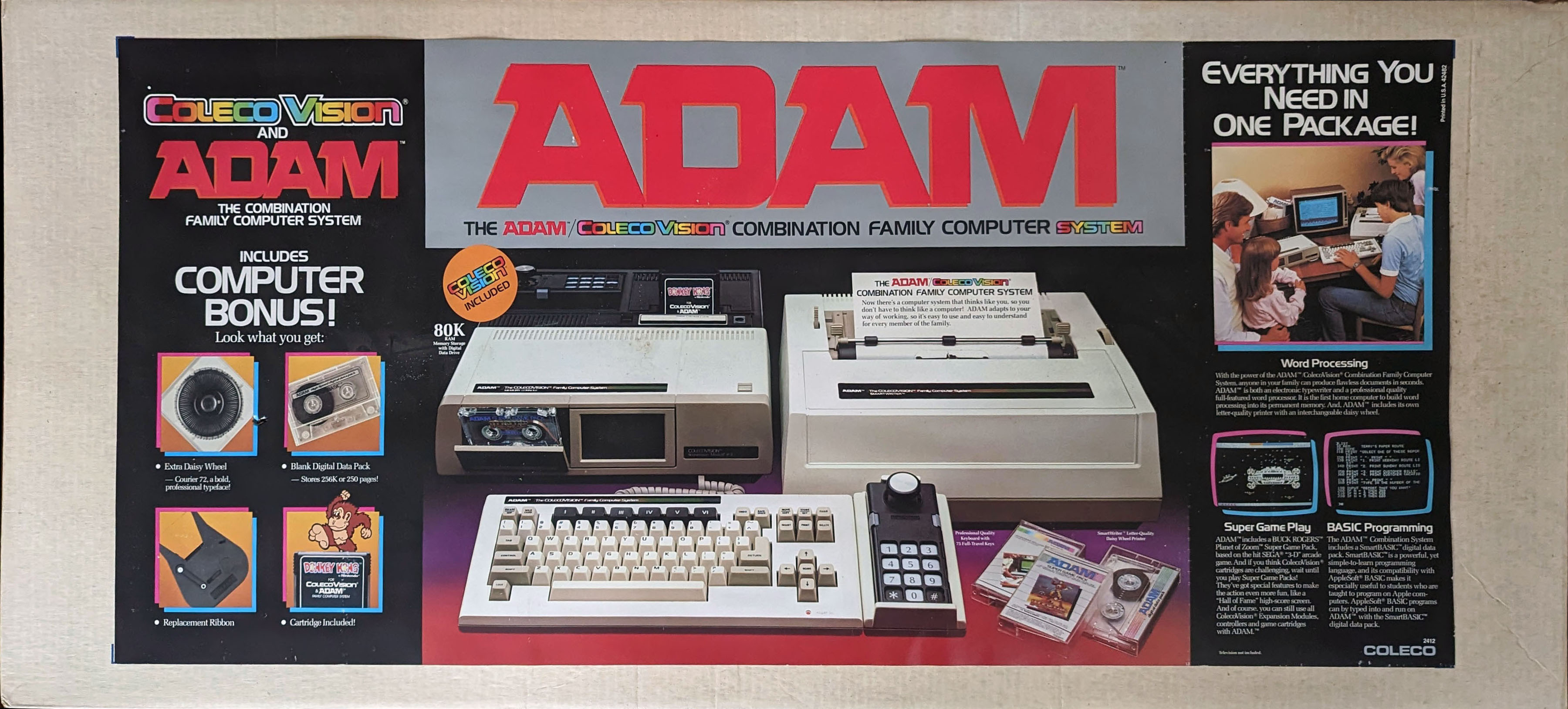 Combination Family Computer System
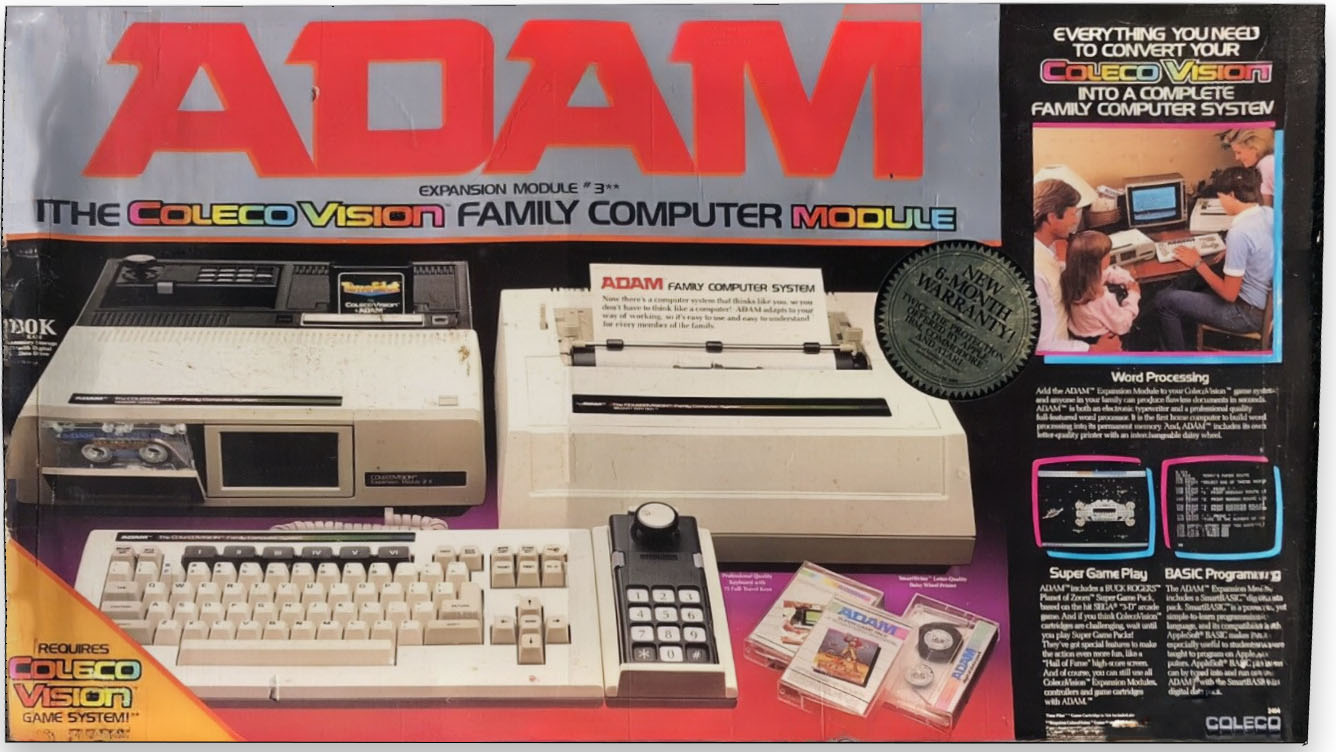 Expansion Module #3
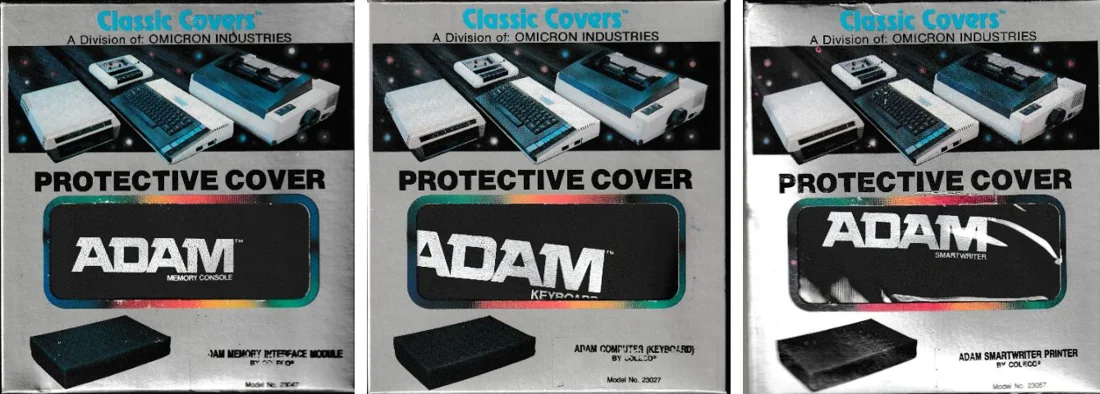 ADAM dust covers
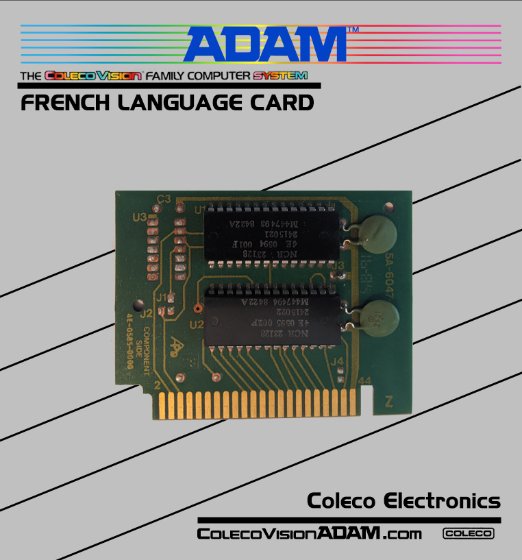
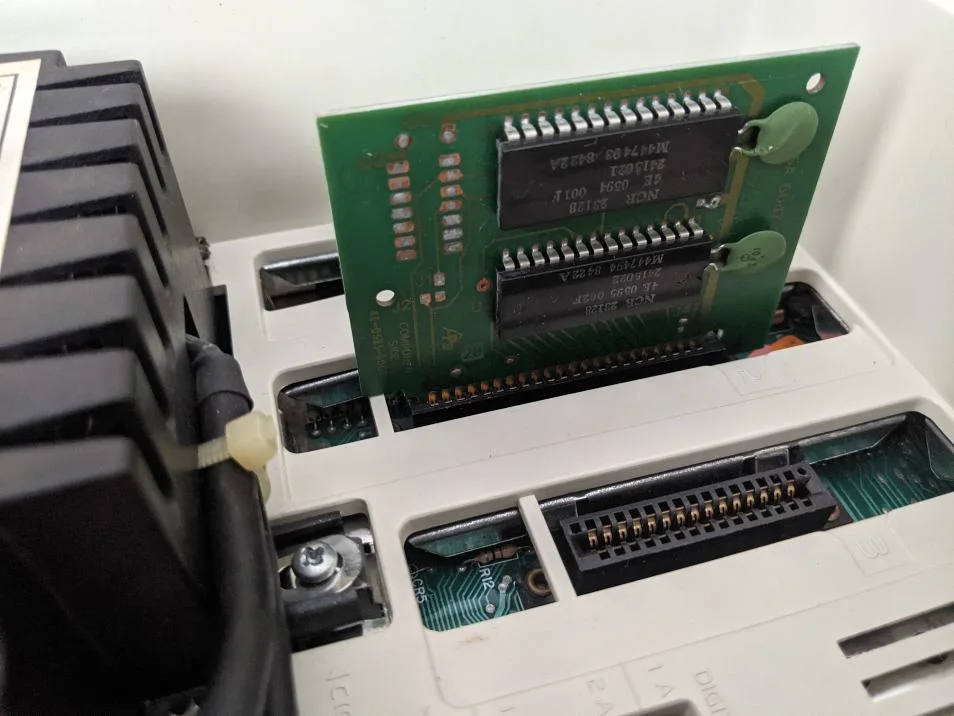 Module #3 with French card