
The devices at a glance
Status labels are a guide only: small makers sell in runs, so stock comes and goes. Open a card to see the catalog entry and track the ones you own.
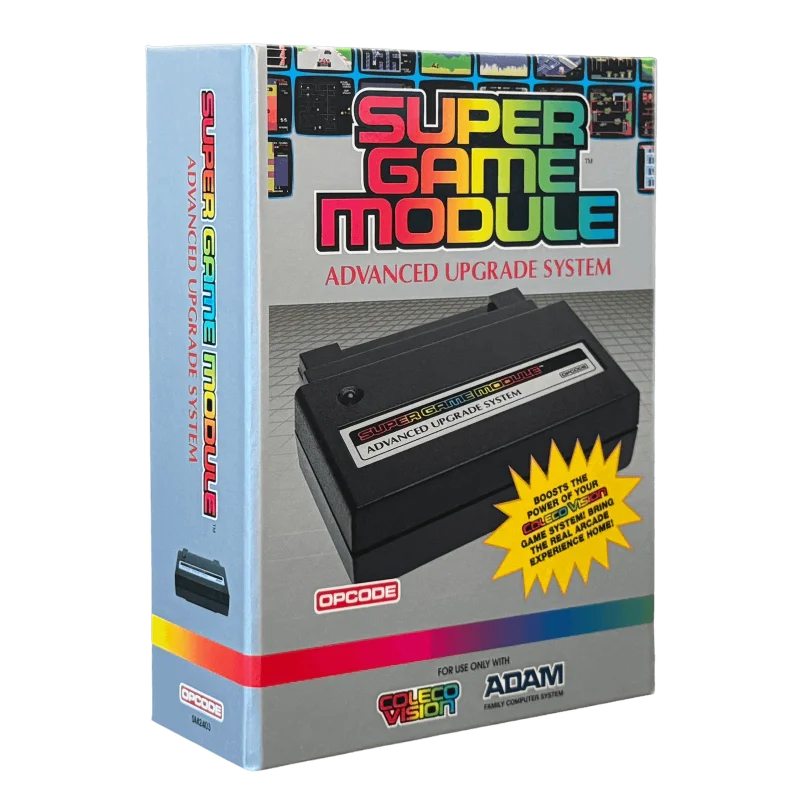 Super Game ModuleOpcode Games · 2012Check with seller
More memory and an extra sound chip for enhanced games.
Catalog entry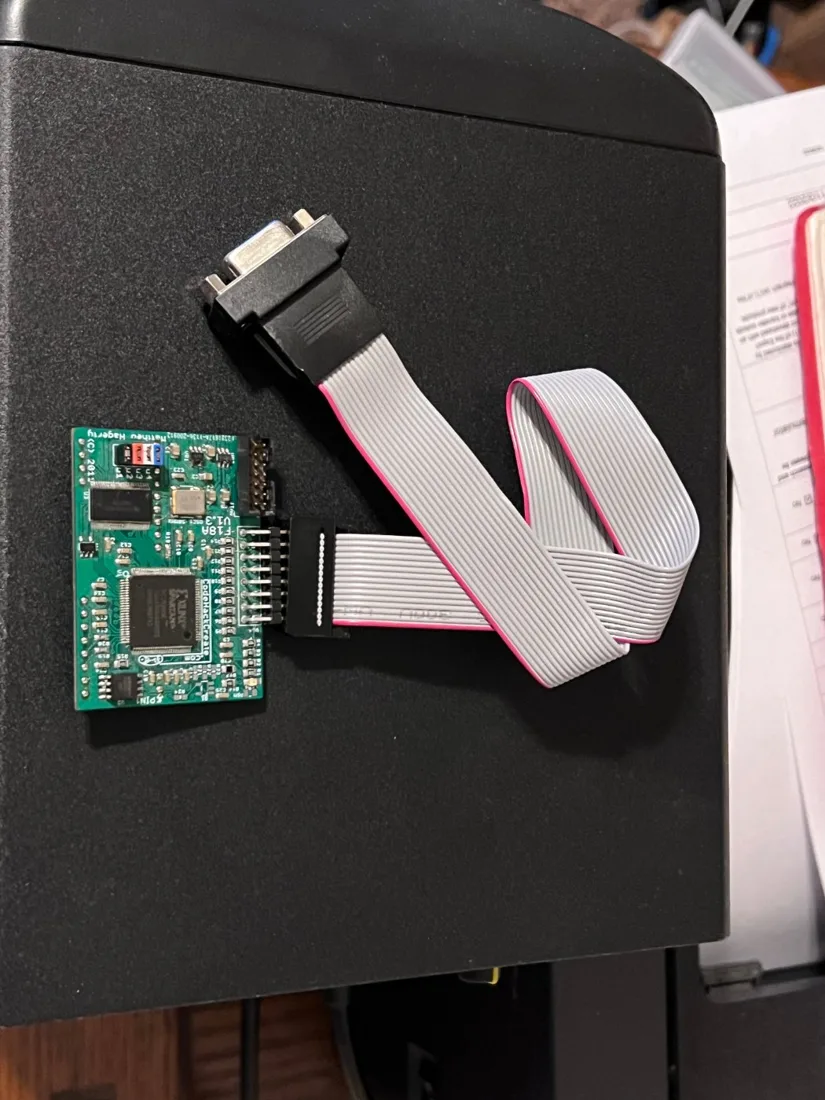 F18AMatthew Hagerty · 2012Discontinued
Replaces the video chip for sharp VGA output.
Catalog entry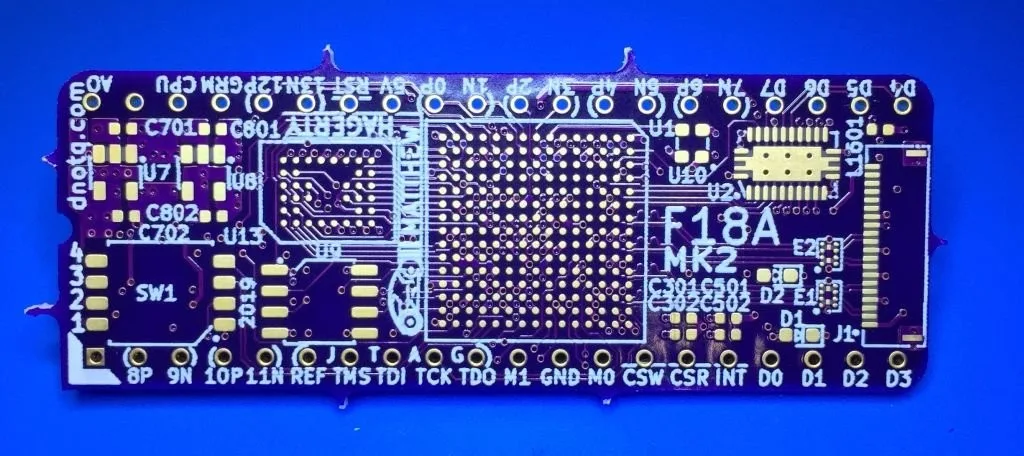 F18A MK2Matthew Hagerty · 2020Check with seller
Smaller redesign with digital and VGA output.
Catalog entry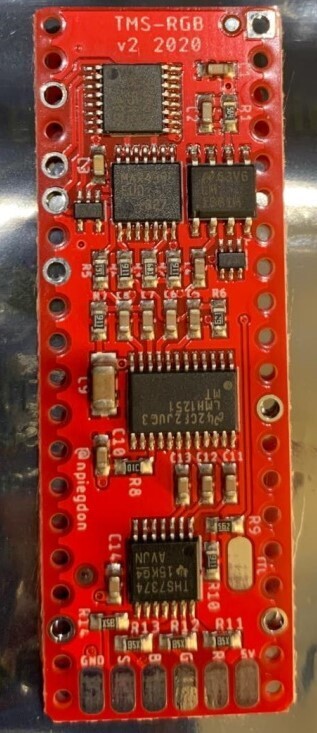 TMS-RGBOpen hardware · 2020Free / open source
Clean analog RGB from the original video chip.
Catalog entry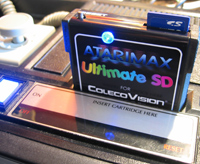 Ultimate SD CartridgeAtariMaxCheck with seller
Runs games and MegaCart titles from an SD card.
Catalog entry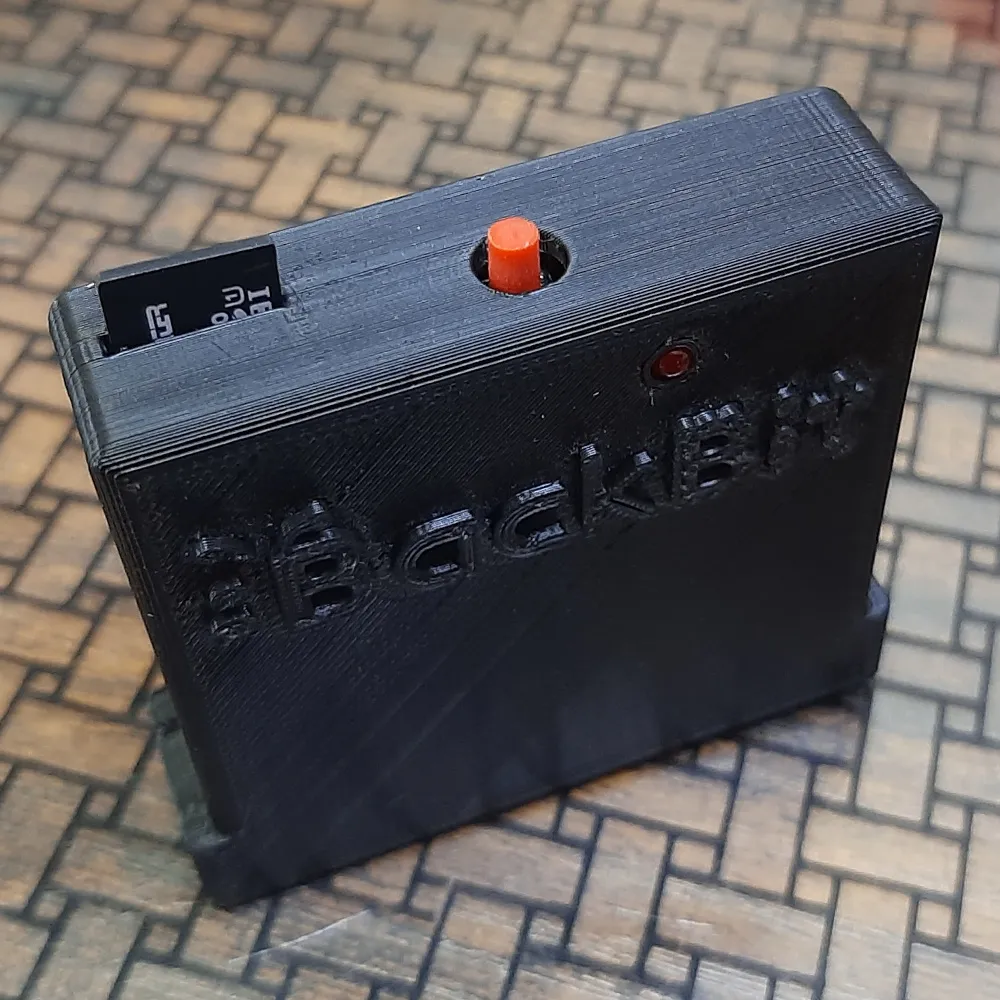 BackBit ProBackBit · 2024Check with seller
A multicart with a ColecoVision/ADAM adapter.
Catalog entry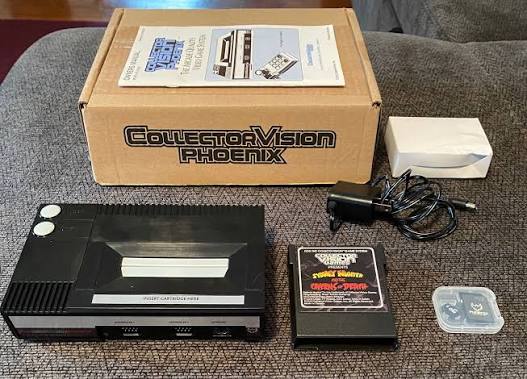 CollectorVision PhoenixCollectorVision · 2019Check with seller
A complete FPGA ColecoVision with HDMI.
Catalog entry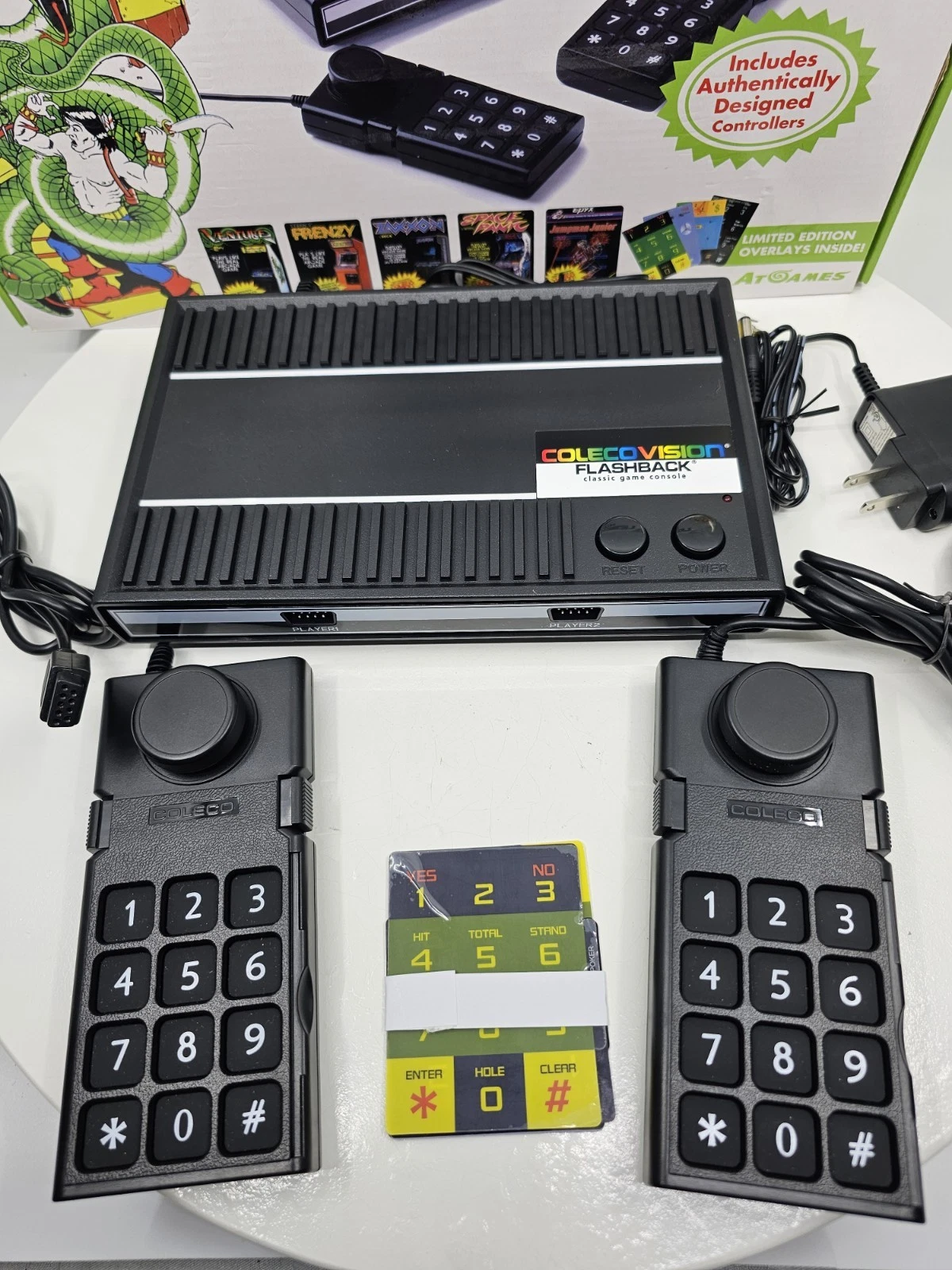 ColecoVision FlashbackAtGames · 2014Discontinued
A plug-and-play console with built-in games.
Catalog entry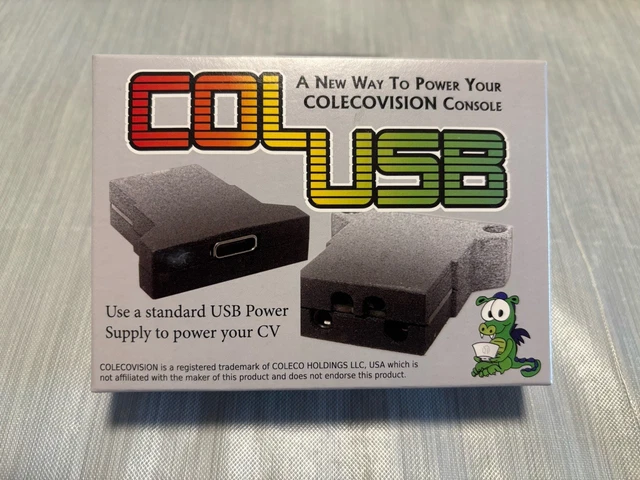 ColUSB power supplyDragon Box · 2019Check with seller
Powers the console from USB.
Catalog entry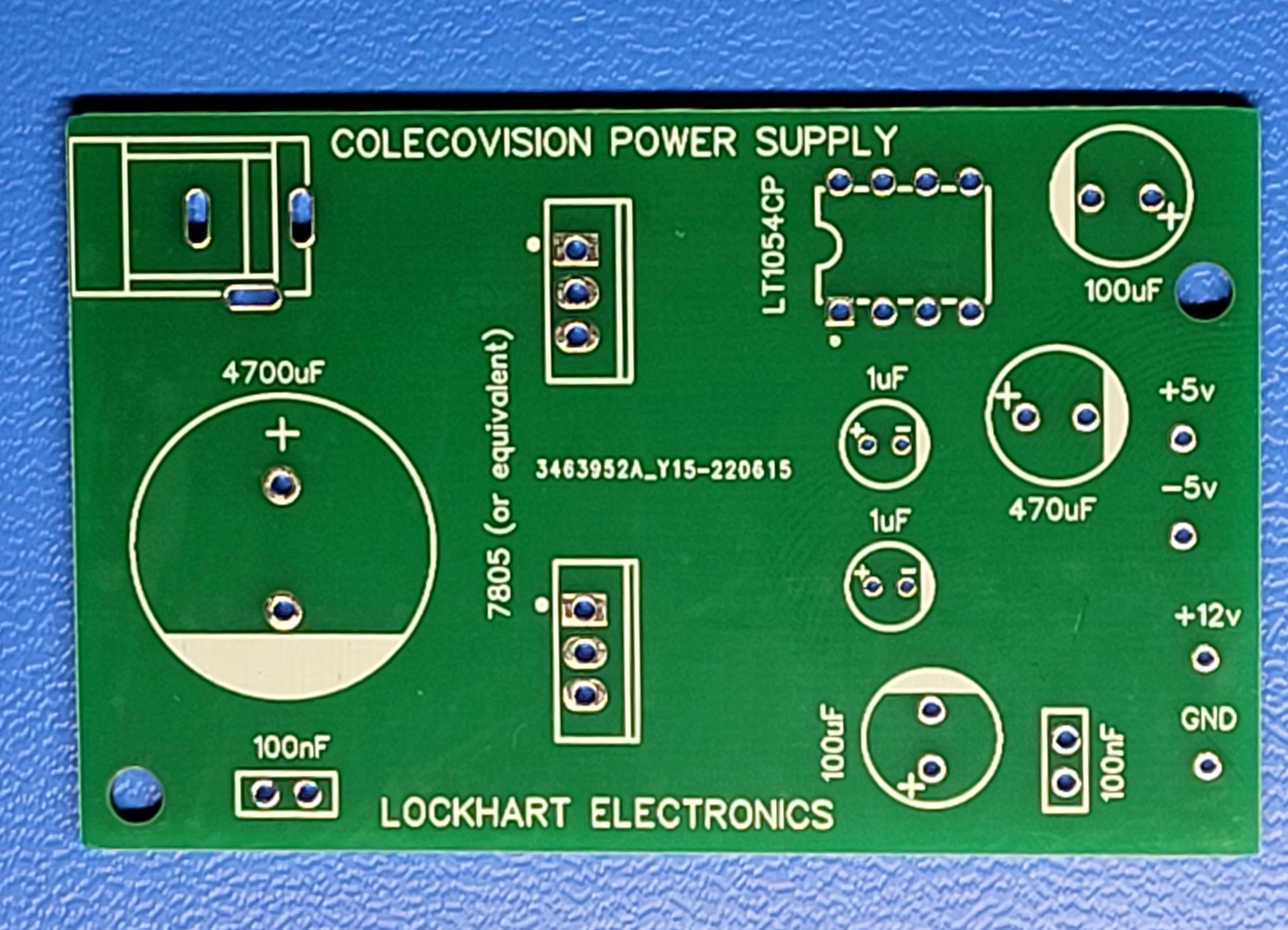 Replacement power supplyOpen source · 2022Free / open source
A modern build-it-yourself power supply.
Catalog entryAt a glance
The table below summarizes the most significant community-era devices. Years refer to first availability; many items have been produced in several small runs since, and stock comes and goes.
| Device | Maker | Year | What it does |
|---|---|---|---|
| Super Game Module (SGM) | Opcode Games (Eduardo Mello) | 2012 | Plugs into the front expansion port; raises usable RAM from 1 KB to 32 KB and adds an AY-3-8910 sound chip for enhanced homebrew and arcade ports. |
| Super Game Cartridge (SGC / SGC2) | Opcode Games | 2016 / 2021 | Opcode's own cartridge board with bank switching and battery-free EEPROM saves, used for its larger releases. |
| F18A | Matthew Hagerty (codehackcreate) | 2012 | FPGA board that replaces the TMS9928A video chip and outputs sharp VGA; adds optional enhanced video modes. |
| F18A MK2 | Matthew Hagerty | 2020 | Smaller redesign of the F18A that fits a standard 40-pin footprint, with digital (DVI) and VGA output. |
| TMS-RGB | Nicholas Piegdon (open hardware) | 2020 | Small analog board soldered to the video chip that produces clean RGB with composite sync. |
| Ultimate SD Cartridge | AtariMax (Steven J. Tucker) | c. 2010 (later runs) | SD-card multicart with 512 KB SRAM; runs standard 32 KB games, MegaCart titles up to 512 KB and special formats. |
| BackBit Pro | BackBit | 2020s | Universal SD-card cartridge for 40+ systems; needs a separate ColecoVision/ADAM adapter. |
| PiCOLECO | Andrea Ottaviani (aotta) | 2020s | DIY flash cart built around a Raspberry Pi Pico; drag-and-drop over USB, limited to 32 KB games. |
| ColecoVision Flashback | AtGames | 2014 | Licensed plug-and-play system with 60 built-in games and two new keypad controllers; composite output. |
| CollectorVision Phoenix | CollectorVision | 2018 (announced) / 2019-20 (shipped) | FPGA ColecoVision-compatible console with HDMI, built-in SGM and F18A compatibility, original cartridge slot. See /phoenix. |
| ColUSB | DragonBox (OpenPandora GmbH) | 2010s | Plug-in adapter that powers the console from a phone-style USB charger instead of the original brick. |
| Composite AV kit | Console5 and others | 2010s | Small board that taps the video and audio before the RF modulator to give composite A/V output. |
| VRAM replacement kit | Console5 | 2010s | Swaps the eight power-hungry 4116 video RAM chips for a modern single-voltage memory solution. |
Opcode Super Game Module (SGM)
The Super Game Module is the most influential piece of new ColecoVision hardware. Designed by Eduardo Mello of Opcode Games, it was launched in 2012, timed to the console's 30th anniversary, and the first run carried an official Coleco license. It plugs into the expansion port on the front of the ColecoVision (or the side of an ADAM memory console) and requires no internal modification.
The module does two things. First, it expands the console's working memory from a cramped 1 KB to 32 KB, with 24 KB mapped into the main address space and an optional extra 8 KB that can overlay the BIOS area. Second, it adds a General Instrument AY-3-8910 sound generator, the same family of chip found in MSX computers and many arcade boards, which works alongside the stock SN76489. Together these allow far more faithful ports of arcade and MSX games, larger levels, smoother animation and high-score saving.
Opcode reports more than 3,000 units sold since 2012, across several production runs. Revisions include the original Coleco-branded unit, a later Opcode-branded version and a 2016 revision that also works with French CBS/SCART-modified PAL consoles. Over 100 SGM-enhanced titles have been released or announced, including Opcode's own Pac-Man and Gradius-style projects and many Team Pixelboy and CollectorVision releases. SGM games will not run on an unexpanded console.
SGM functionality is now built into, or emulated by, several other devices: the CollectorVision Phoenix, the MiSTer FPGA ColecoVision core, and most current software emulators (ColEm, CoolCV, Gearcoleco, openMSX, JollyCV, ColecoDS). Opcode has also announced a Super Game Module 2 with HDMI output, a custom chip and expanded graphics and sound; at the time of writing it should be treated as a future product.
F18A and successors: VGA and digital video
The F18A, designed by Matthew Hagerty and sold through his codehackcreate store, is an FPGA-based, pin-compatible replacement for the TMS9918A family of video display processors. In a ColecoVision it takes the place of the TMS9928A and produces a crisp 640x480 VGA picture instead of the console's soft RF signal. Beyond perfect compatibility mode it adds optional extras such as an 80-column text mode, a programmable 4,096-color palette, more sprites per line, extra scrolling layers and a small built-in co-processor; only software written for the F18A uses these features. Roughly 550 original boards were made between 2012 and late 2017.
The F18A MK2, available from 2020, is a redesign that fits within a standard 40-pin chip footprint and offers both digital (DVI-compatible) and VGA output, extra video memory and USB firmware updates.
Installation is not a beginner job. The original video chip must be desoldered without lifting the fragile ColecoVision traces, a 40-pin socket fitted, and the F18A (ColecoVision version with tall pins) plugged in. The VGA connector has to be mounted on the rear of the case, audio must be tapped separately from the board, and community guides recommend increasing reset capacitor C3 from 1 uF to about 10 uF so the board initializes reliably. Owners report that NTSC (North American) boards work well, while European PAL ColecoVisions have shown compatibility problems. A VGA-to-HDMI converter is needed for most modern TVs. Note also that video mods do not affect the Atari 2600 Expansion Module, which generates its own picture.
Multicarts and flash carts
Modern multicarts let a collector run the entire ColecoVision library, homebrew included, from a single cartridge, and they are also the main way developers test new games on real hardware.
AtariMax Ultimate SD Cartridge: designed by Steven J. Tucker, this SD-card cart has its own 50 MIPS microcontroller, 512 KB of SRAM and 128 KB of flash. It runs ordinary 32 KB games, MegaCart bank-switched images up to 512 KB, and special cases such as Lord of the Dungeon with save memory. Firmware, bank-switching logic and menu software are all updated by copying files to the SD card. The cartridge first appeared around 2010 and has been offered again in later production runs.
BackBit Pro: a universal SD-card cartridge that supports more than 40 consoles and computers through inexpensive system-specific adapters; a ColecoVision/ADAM adapter must be bought separately. It handles standard 32 KB images and MegaCart images up to 512 KB.
PiCOLECO: a do-it-yourself flash cart by Andrea Ottaviani built on a Raspberry Pi Pico clone and a very simple PCB. Games are copied over USB as if to a flash drive. It is limited to 32 KB games, so MegaCart titles will not work, and file names longer than 32 characters can stop a game from launching. Most original releases run, but homebrew compatibility is mixed.
About the MegaCart format: classic ColecoVision cartridges top out at 32 KB. The MegaCart scheme, widely used by modern homebrew, divides a larger ROM into 16 KB pages and switches them by reading the last 64 addresses of cartridge space, allowing up to 1 MB in theory (512 KB is the common practical ceiling). Opcode's Super Game Cartridge (2016) and SGC2 (2021) are Opcode's own boards with bank switching and battery-free EEPROM saves; most new Opcode games ship on them and many also need the SGM.
Before buying any multicart, check which formats it supports (32 KB, MegaCart, SGM titles, EEPROM saves). The SGM itself is still required on real hardware for SGM games regardless of the cart used.
ColecoVision Flashback (AtGames, 2014)
In autumn 2014 AtGames released the ColecoVision Flashback, a licensed plug-and-play console that sold for about US$40. It does not take cartridges; instead it holds 60 built-in games, mostly original Coleco and third-party titles such as Zaxxon, Venture, Frenzy, Mouse Trap and Montezuma's Revenge, plus a dozen modern homebrews such as Princess Quest and Mecha-8. A version sold through Dollar General added Antarctic Adventure as a 61st game. Well-known licensed titles such as Donkey Kong and BurgerTime were not included, and sports games are scarce.
The unit connects by composite video and audio and comes with two wired controllers that follow the original layout (stick, side buttons and 12-key keypad) but are lighter and smaller. Game-specific overlays are included, though they do not fit original controllers. The Flashback controllers are not compatible with an original ColecoVision.
Reviewers found most games faithful to the originals, with occasional glitches such as wrong colors or lock-ups. For collectors it is a cheap, convenient way to play licensed games on a modern TV, but it is not a substitute for original hardware or a multicart.
CollectorVision Phoenix
The CollectorVision Phoenix is an FPGA-based, ColecoVision-compatible console with HDMI output, original cartridge slot and controller ports, an SNES controller port, built-in SGM and F18A compatibility and SD-card core updates. It has its own page: see /phoenix.
Controllers and adapters
The ColecoVision controller combines a joystick, two side buttons and a 12-key keypad on one cable. Because many games use the keypad only to choose a skill level, plain one-button Atari-style joysticks work for a surprising number of games once the game is started; cvaddict publishes a wiring diagram for a no-keypad controller.
New options include RetroGameBoyz's ColecoVision control pad paired with a separate keypad adapter module that accepts DB-9 joysticks (Atari-style one-button sticks work; Sega Genesis pads are not supported by that module). Hobbyists on AtariAge have documented modifying Sega Genesis controllers to work on a ColecoVision. The Phoenix accepts SNES-style pads directly through its own port, and CollectorVision bundles a 'SNES Scout' controller with some Phoenix packs.
Original specialty controllers (Super Action Controllers, Expansion Module #2 steering wheel, Roller Controller) have no full modern replacement; collectors still rely on original units.
Power supplies
The ColecoVision's original power brick is large, runs warm and is now more than 40 years old. Because it supplies several voltages (+5 V, -5 V and +12 V) to the console, a failing brick can damage the board. Modern alternatives include the ColUSB adapter from DragonBox, which plugs into the console's power port and runs from a standard phone charger with enough current (sold in limited runs and often out of stock), several regulated modern replacement bricks sold by small retro vendors such as Keelog, and rebuild services for original supplies. Some generic third-party bricks are reported to add noise to the picture. An alternative internal approach, documented on AtariAge, rewires the console to run from a single modern supply.
Video mod kits sold as hardware
Stock ColecoVisions only output RF. Inexpensive composite A/V kits, such as Console5's small PCB, take video and audio from the board before the RF modulator and give a noticeably cleaner picture with modest soldering. For better quality, TMS-RGB (an open-hardware design by Nicholas Piegdon, sold pre-made by third parties) delivers RGB with composite sync for SCART, upscalers and line doublers. These mods are covered in more detail on the Mods & Repairs page.