
Hanimex Pencil II - The ColecoVision Clone That Time Forgot
A COLECOVISION IN DISGUISE
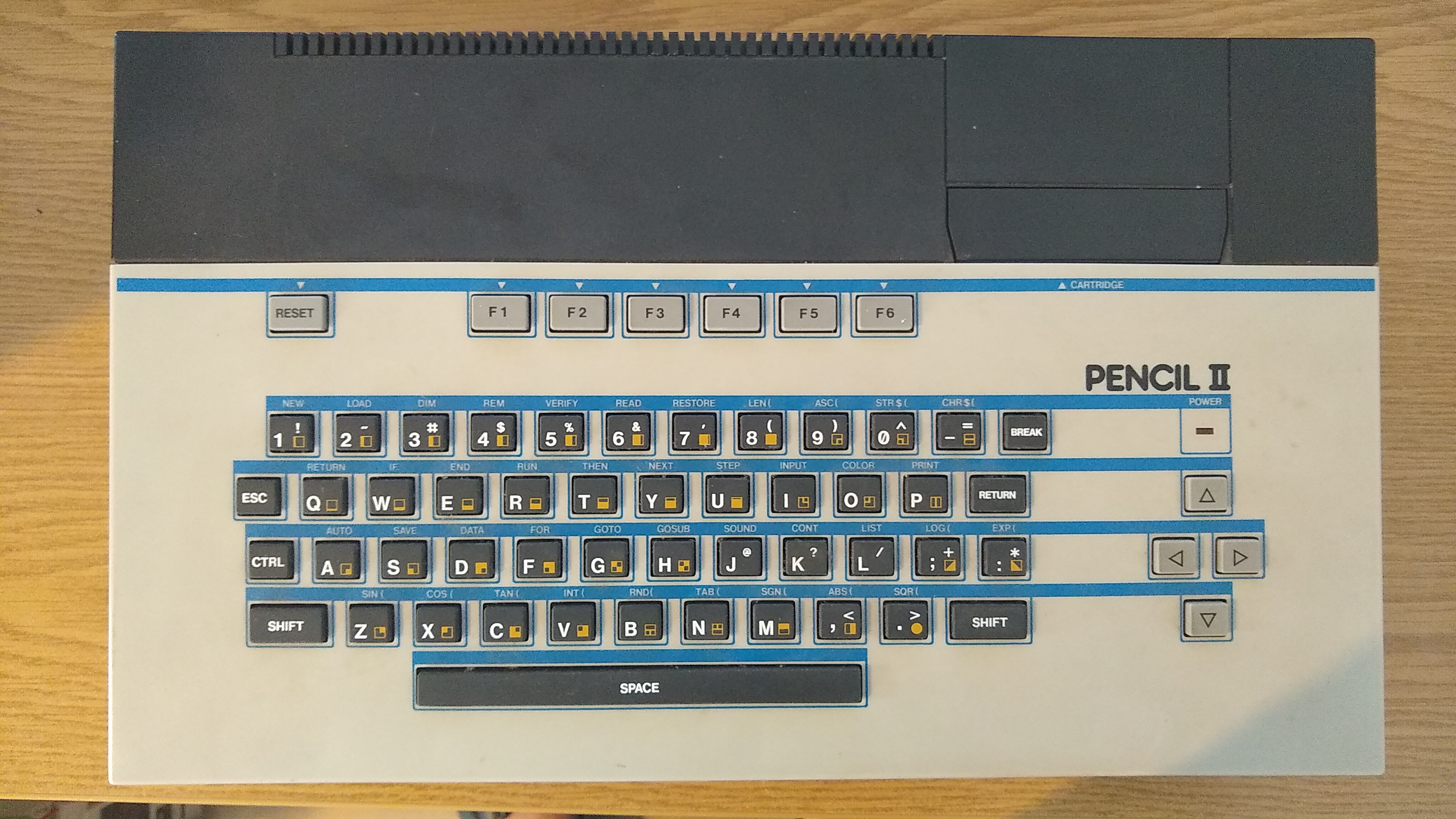
Somewhere in Hong Kong around 1983, a budget electronics company called Soundic Electronics — better known for cranking out Pong clones — decided to build a home computer. They took the exact same chips that powered the ColecoVision game console, added a rubber keyboard, doubled the RAM to a whopping 2 KB, and called it the Pencil II. There was never a Pencil I.
The machine was exported to Australia under the Hanimex brand (short for Jack Hannes Import and Export) and briefly appeared in France and the UK. It was crushed almost immediately by the Commodore 64 and vanished within months. Most units were returned under warranty because the cartridge slot kept coming loose.
Today, the Hanimex Pencil II is one of the rarest Z80 computers in existence. Only three game cartridges were made for it, though a surprisingly complete cassette software library of 27 programs was also released. But what makes it fascinating for ColecoVision collectors is what’s hiding under the hood — it’s a ColecoVision with a keyboard bolted on.
3Original Cartridges 4Homebrew Games 27Cassette Programs 1983Year Released
THE MYSTERY OF THE COLECOVISION ADAPTER
If the Pencil II is really a ColecoVision under the skin, why can’t it just play ColecoVision cartridges? The answer is the BIOS. When a ColecoVision boots, it looks for the magic bytes $55/$AA at the start of the cartridge. When a Pencil II boots, it looks for the string “COPYRIGHT SOUNDIC”. A ColecoVision cartridge doesn’t have that string, so the Pencil II rejects it.
Soundic’s solution was brilliantly simple: a plug-in adapter module. A white plastic cartridge labeled “CARTOUCHES DE JEUX ET ADAPTATEUR” that slid into the side expansion slot.
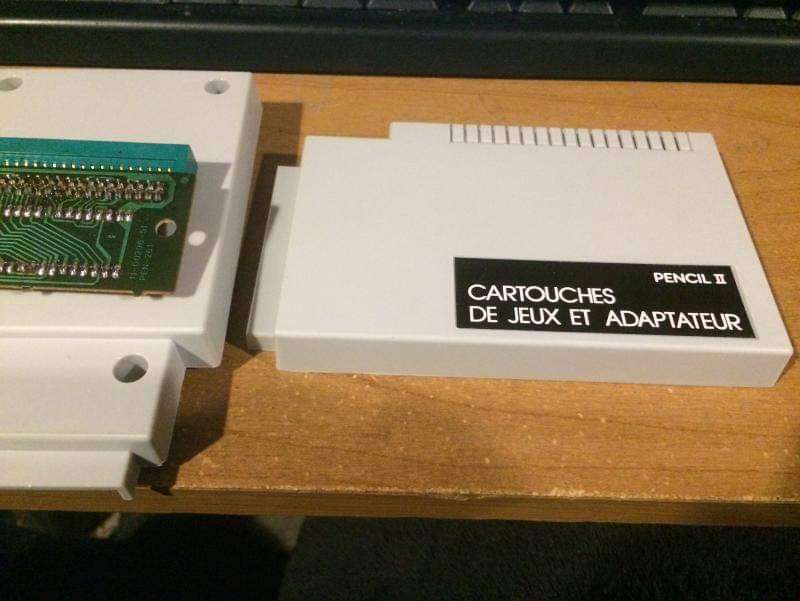 The adapter — French market unit. Plugs into the side expansion slot.
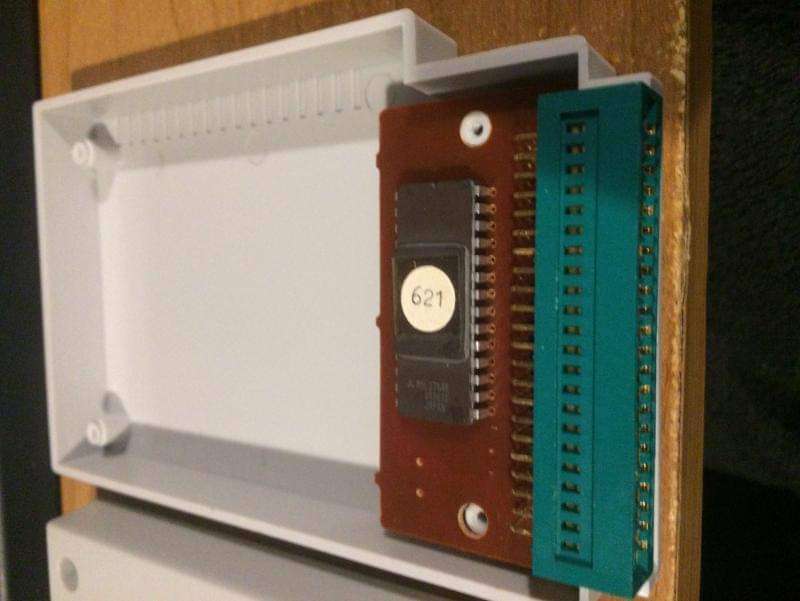 Inside: one chip. A single 8 KB EPROM labeled “621” — that’s it. No glue logic, no decoders.
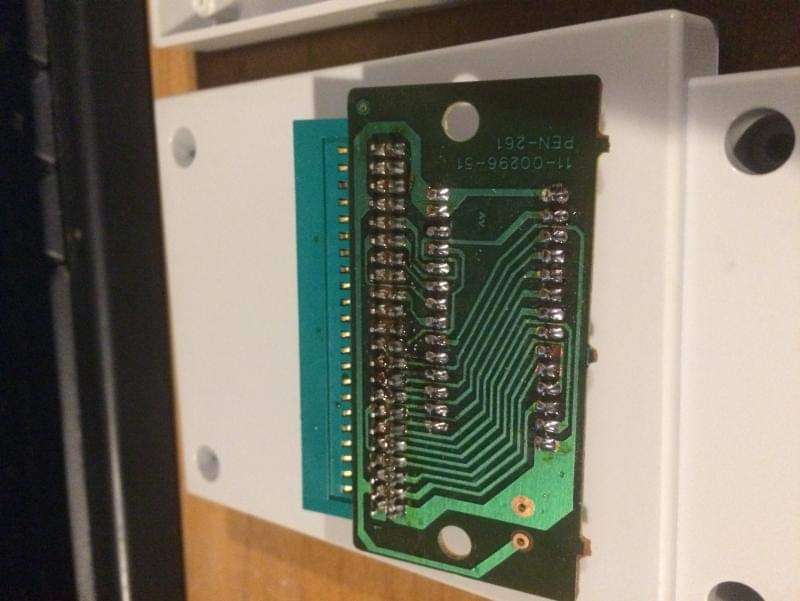 PCB: PEN-261 / 11-00296-S1. Traces route the EPROM directly to the expansion slot.
When you open the adapter, you find a single EPROM chip and nothing else. That chip contains a ColecoVision-compatible BIOS. When plugged in, it overrides the Pencil II’s own BIOS by pulling a disable signal high on the internal ROM. The Pencil II’s main cartridge slot is physically identical to the ColecoVision’s, so CV game cartridges slide right in.
“With the Coleco BIOS, all games that I’ve tried work as if they were in a ColecoVision… Well they are PAL and slow, but they work.” — plgDavid (silicium.org), after testing 20+ ColecoVision cartridges on his modified Pencil II, April 2019The adapter’s BIOS has never been dumped. It remains one of the last undumped ROMs in the ColecoVision ecosystem. The adapter itself is the “holy grail” of Pencil II collecting — far rarer than the already-rare computer itself.
INSIDE THE MACHINE
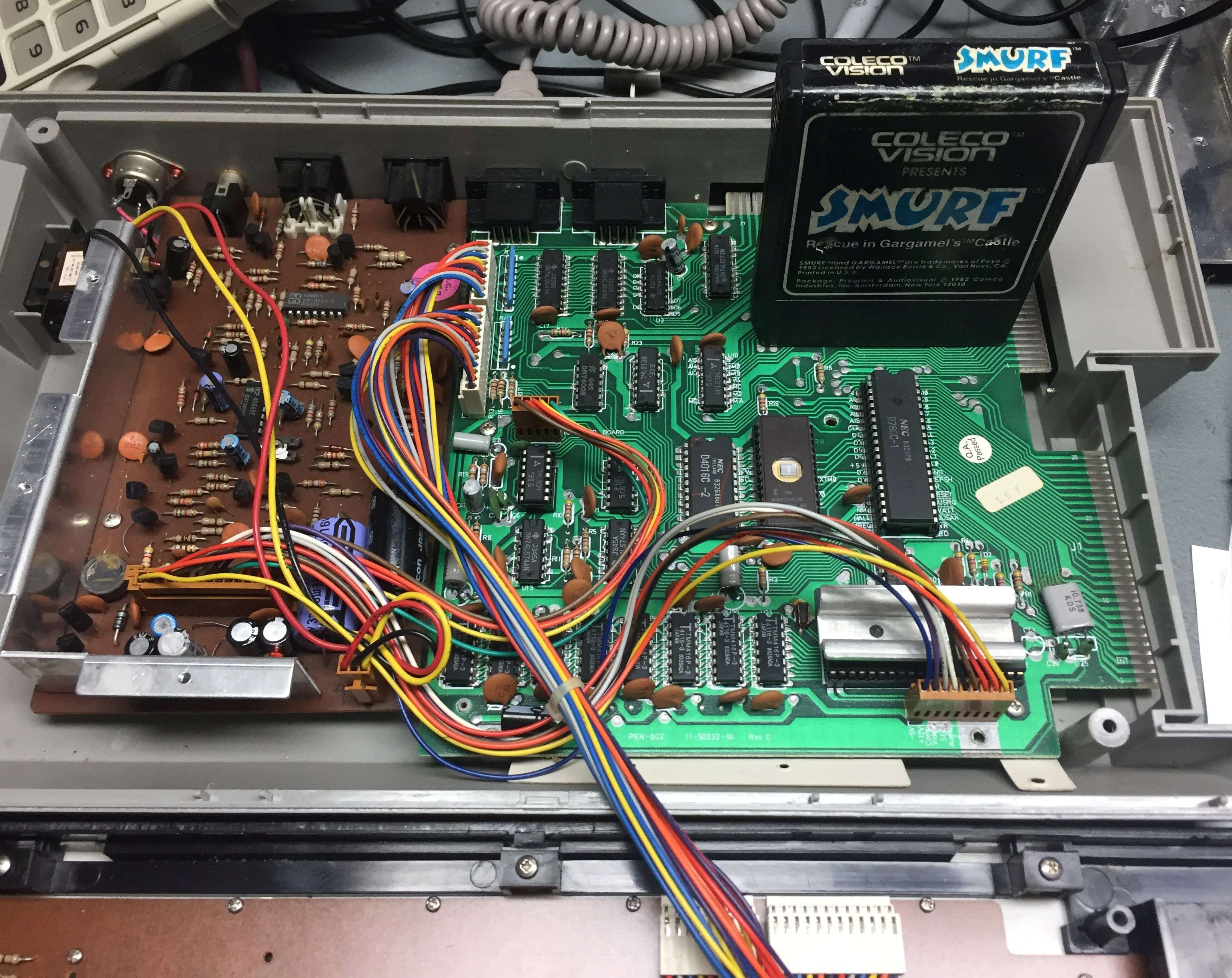
Open up a Pencil II and you’ll find the same chipset that powers a ColecoVision — chip for chip, pin for pin. The CPU is a NEC D780C-1 (a Z80A clone) running at 3.58 MHz. The video chip is a TI TMS9929 (the PAL variant of the ColecoVision’s TMS9918). The sound chip is a TI SN76489A. There’s 16 KB of VRAM. Even the I/O ports are mapped to the same addresses.
The photo here shows plgDavid’s Pencil II with a ColecoVision “Smurf: Rescue in Gargamel’s Castle” cartridge plugged directly into the main slot — running perfectly after a BIOS switch modification. The green CPU board (marked PEN-BG2) and the brown power/SCART board are clearly visible, connected by ribbon cables.
What Soundic added beyond the ColecoVision: a rubber chiclet keyboard (ZX Spectrum style), a cassette interface, a printer port, and an expansion slot for RAM packs (16 KB and 64 KB). They also doubled the system RAM from 1 KB to 2 KB — which turned out to cause no compatibility issues with ColecoVision games whatsoever.
Key Specifications
| CPU | NEC D780C-1 (Z80A clone) @ 3.58 MHz |
| Video | TI TMS9929 (PAL) — 256×192, 16 colors, 32 sprites |
| Sound | TI SN76489A — 3 tone + 1 noise channel |
| RAM / VRAM | 2 KB system RAM (expandable to 80 KB) / 16 KB VRAM |
| BIOS | 8 KB ROM (M5L2764 EPROM) |
| Keyboard | Rubber chiclet with single-key BASIC commands |
| Ports | 2× DB-9 joystick, SCART, composite, cassette, printer, expansion |
| BASIC | SD-BASIC v1.0/v2.0 on 12 KB ROM cartridge (separate purchase) |
| Dimensions | 37 × 22 × 7.5 cm / 1.5 kg |
Pencil II vs ColecoVision: Spot the Difference
| Feature | ColecoVision | Pencil II |
|---|---|---|
| CPU | Z80A @ 3.58 MHz | NEC D780C-1 (Z80A) @ 3.58 MHz |
| VDP | TMS9918A (NTSC) / TMS9929 (PAL) | TMS9929 (PAL) |
| Sound | SN76489AN | SN76489A |
| RAM | 1 KB | 2 KB (expandable) |
| VRAM | 16 KB | 16 KB |
| Keyboard | No | ✔ Chiclet rubber |
| BASIC | No (ADAM needed) | ✔ SD-BASIC cartridge |
| Cassette | No (ADAM needed) | ✔ Built-in |
| Cart Slot Pinout | Identical 30-pin | |
| Memory Map | Identical (confirmed by trace) | |
| I/O Ports | Identical ($BE/$BF, $E0/$E2, $FF) | |
SOFTWARE LIBRARY — MORE THAN MEETS THE EYE
The Pencil II is often described as having “only two or three games,” but the reality is more interesting. While only three cartridges were released, the system also had a surprisingly robust cassette software library of 27 programs across 6 tapes, published by Expo in 1984. All known software has now been dumped and preserved in MAME.
Game Cartridges (3)
PEN-701: Le Jardin Magique / Big Foot Chase — Dumped January 2026. The mystery is solved: “Big Foot Chase” (seen at the Canadian PC Museum) and “Le Jardin Magique” (The Magic Garden) are the same game, renamed for different markets. PEN-702: Le Plongeur à la Recherche du Trésor (Treasure Hunt) — Dumped May 2019 by Silicium.org. The first Pencil II game ever preserved. PEN-700: SD-BASIC v2.0 — The programming cartridge. Versions 1.0 (Soundic) and 2.0 (Hanimex) exist.Expo Application Software Library — 27 Programs on 6 Tapes (1984)
Published by Expo, this cassette collection reveals the Pencil II was marketed as a genuine home computer, not just a game machine. The library spans games, education, music, and business applications — all requiring the SD-BASIC cartridge and a cassette recorder to load.
Tape 1 — Getting Started INSTRUCT — System instruction/tutorial TEST — System test program EDPRAC — Education practice Tape 2 — Math & Music MATHVADR — Math Invaders (educational game) MATHTASK — Math tasks/drills MUSIC — Music composition program MOOG — Synthesizer/sound program Tape 3 — Numbers & Logic NUMWORD — Number-to-word conversion NUMSIZE — Number sizing exercise PENMIND — Mastermind-style logic game CALENDAR — Calendar utility Tape 4 — Education SPELLER — Spelling practice GEOGRPHY — Geography quiz HISTORY — History quiz Tape 5 — Business & Productivity CHEQUE — Checkbook manager EXPENSES — Expense tracker INVENTRY — Inventory management LETTER — Letter writer/word processor Tape 6 — Games NAUGHTS — Noughts & Crosses (Tic-Tac-Toe) BATLSHIP — Battleship TANK — Tank combat game LOGIC — Logic puzzle gameEach tape also includes an INFORM program (INFORM2 through INFORM6) providing loading instructions. The full MAME cassette software list documents all 27 programs.
Downloads — Cassette Tapes & Manual
The demo tapes were dumped by Robbbert (MAME developer). We are hosting the tape images and user manual for preservation:
TAPE 1 TAPE 2 TAPE 3 TAPE 4 TAPE 5 TAPE 6 USER MANUAL (PDF)With the ColecoVision Adapter
With the CV adapter (or BIOS switch mod), the Pencil II gains access to the entire ColecoVision library of 125+ cartridges. plgDavid tested over 20 CV games with zero failures. The 2 KB vs 1 KB RAM difference caused no compatibility issues.
Homebrew — New Games Are Still Being Made
Perhaps the most remarkable chapter in the Pencil II’s story: developers are still creating new software for the platform, over 40 years after its release. The MAME cartridge software list now includes 4 homebrew titles alongside the 3 originals:
H-Tron (2019) — A Tron-style light cycle game, created during the 2019 Bannister forum revival Deepspace (2022) — A space-themed game Mastermind RK (2025) — The classic code-breaking logic game Sokoban RK (2025) — The classic box-pushing puzzle game New Software in 2019 — 36 Years After Release xavierm (Xavier Messner) wrote new Z80 assembly programs for the Pencil II in 2019, including a Nyan Cat demo and VDP raster bar tests. His code is published at github.com/xmessner/pencil2 — the only modern development SDK for native Pencil II software. The machine is also emulated in MAME (driver: pencil2) and ColecoDS (Phoenix Edition).
PHOTO GALLERY
High-resolution photographs and PCB scans from plgDavid (silicium.org) and xavierm, April 2019. These images documented the Pencil II’s internals for the first time and enabled the reverse-engineering of the ColecoVision adapter mechanism.
The Box, Cartridges & Peripherals
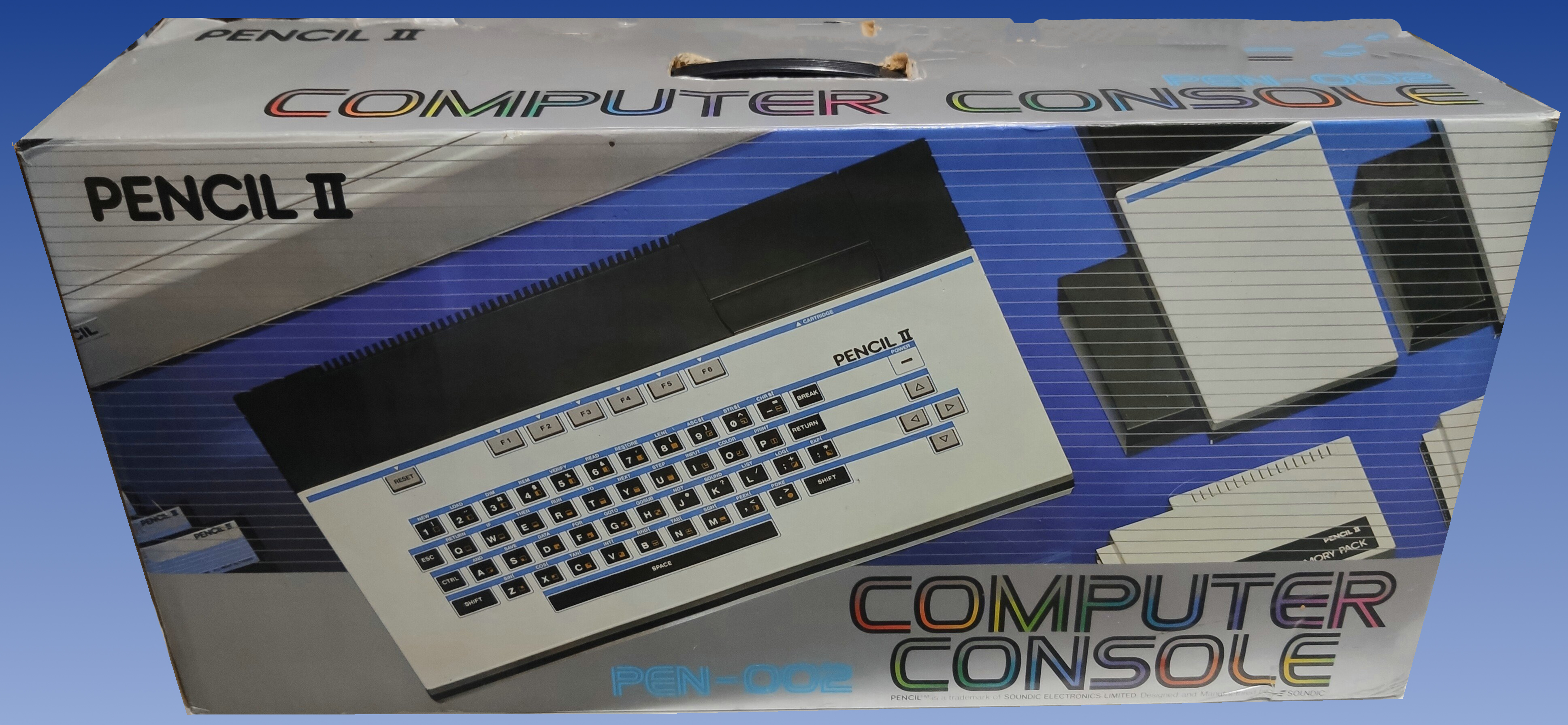 Retail Box: The Pencil II in its original packaging. Extremely rare to find boxed.
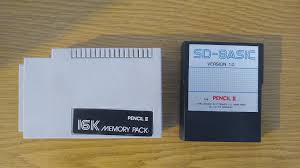 Memory Pack & SD-BASIC: The 16 KB RAM expansion and SD-BASIC cartridge — essential accessories for using the Pencil II as a computer.
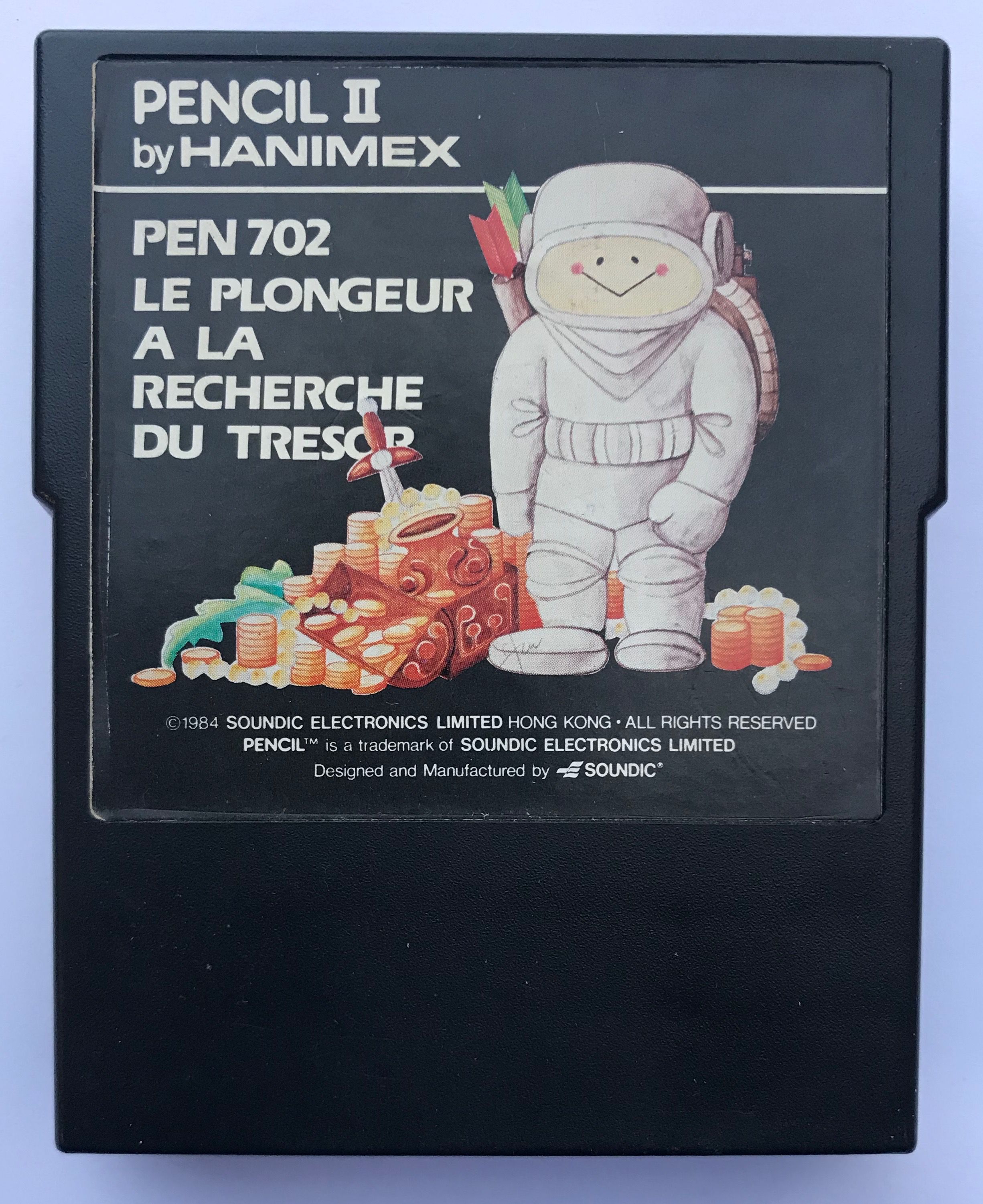 Game Cartridge: PEN-702 “Le Plongeur à la Recherche du Trésor” (Treasure Hunt) — one of only two original game cartridges. Dumped May 2019.
Expo Cassette Software
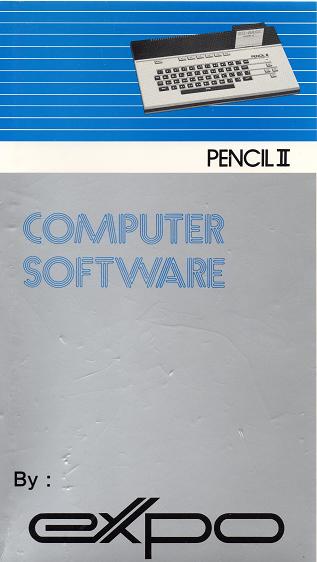 Expo Software Cover: The “Computer Software by Expo” cassette library packaging. 27 programs across 6 tapes covering education, games, music, and business.
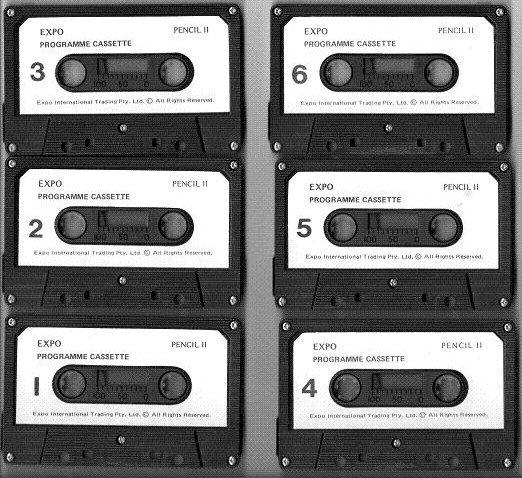 Demo Tapes: The 6 cassette tapes bundled with the Pencil II. All dumped by Robbbert (MAME developer) and available for download below.
Motherboard & Internals
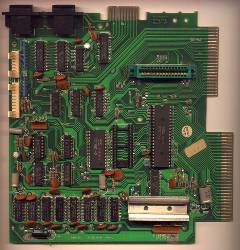 CPU Board (Top): PEN-BG2 11-50032-10 Rev C. The Z80A, TMS9929 VDP, and 74LS138 decoder are visible.
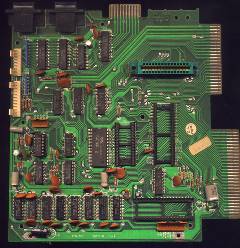 CPU Board (Bottom): plgDavid traced the 74LS138 from this side to map the complete memory architecture.
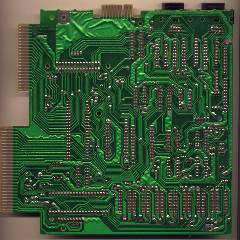 CPU Board (Solder Detail): Dense trace routing for the Z80, VDP, and memory decoder.
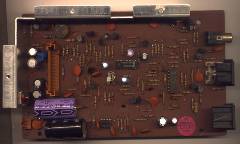 Power/RF Board (Top): PEN-002F PERITEL 11-00357-00 REV.2. Power regulation, SCART output, cassette interface.
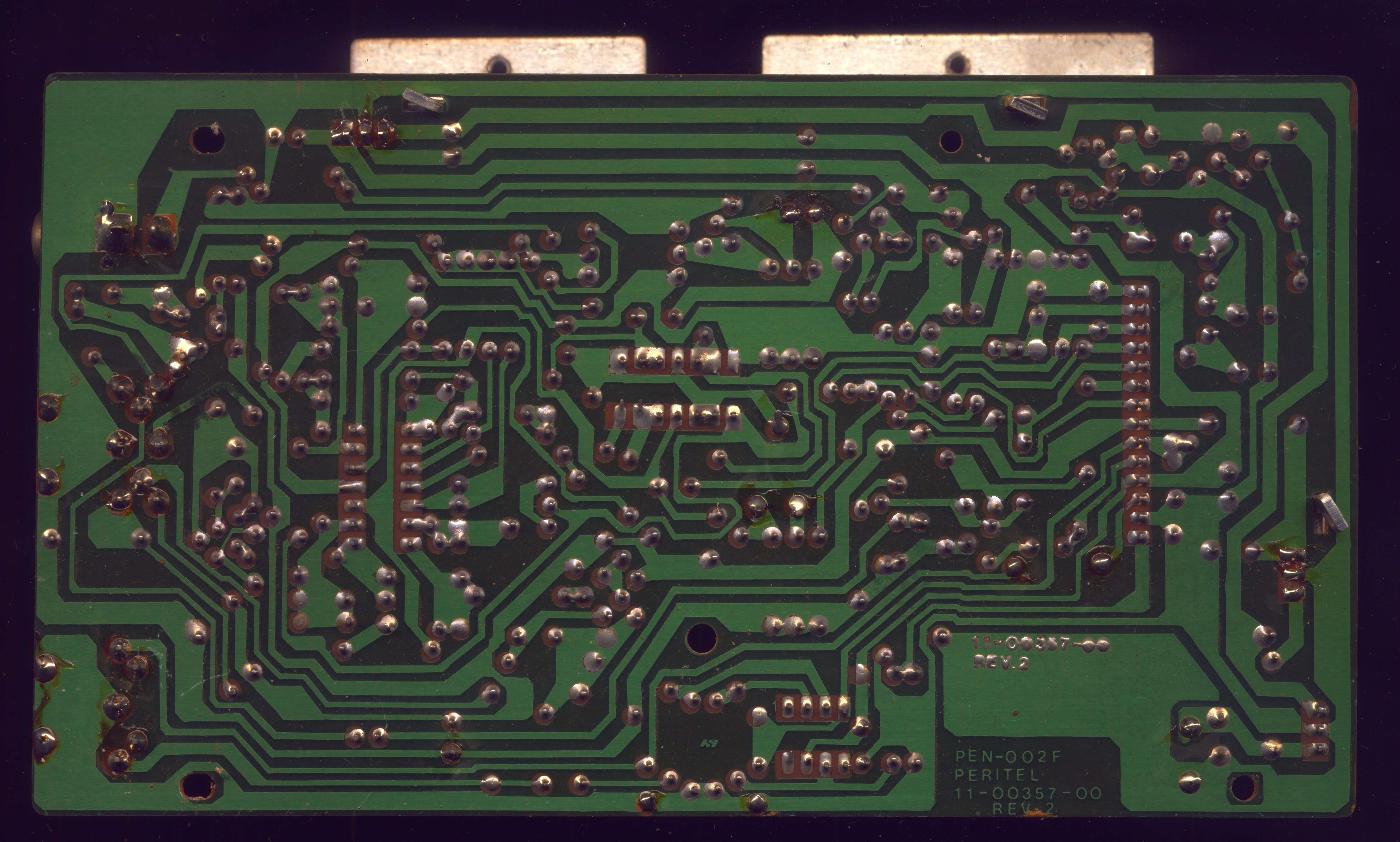 Power/RF Board (Bottom): High-res flatbed scan. “PERITEL” = French for SCART connector.
The Proof: A ColecoVision Smurf cartridge running in the Pencil II via the BIOS switch hack.
Photos: plgDavid (silicium.org) and xavierm, via Bannister/MAME forums and ImageShack, April 2019.
COLLECTING & RARITY
Why It’s Rare Tiny production run by a small Hong Kong budget manufacturer Only sold in Australia, France, and select European markets Most units returned under warranty (loose cartridge slot) Only 3 game cartridges ever released No advertising or marketing presence ColecoVision adapter produced in even smaller quantities Collector Notes Complete boxed units do appear on European eBay occasionally Soundic-branded units (no Hanimex logo) may be rarer still The ColecoVision adapter is the ultimate “holy grail” accessory French market units launched November 1984 at 2,300 FF User manual archived at Archive.org Maintenance Warning If you acquire a Pencil II, open it immediately and resolder every joint on the cartridge slot connector. This is the #1 failure point. Also dump the M5L2764 BIOS EPROM right away — these chips are prone to bitrot (plgDavid’s unit read half garbage). Tighten the two self-tapping screws on the slot socket firmly.
ABOUT SOUNDIC & HANIMEX
Soundic Electronics (Hong Kong) Budget electronics manufacturer, 1970s–80s Known for Pong-style consoles and handheld games Products rebranded and sold under many names worldwide The Pencil II was their only home computer — ever Soundic-branded units carry a 1983 copyright date Hanimex (Australia) Full name: Jack Hannes Import and Export Australian trading company, originally a camera/lens importer Imported and rebranded Pong games from Asian manufacturers Distributed the Pencil II in Australia and Europe from 1984
RESOURCES & LINKS
MAME FORUM THREAD PENCIL II DEV CODE USER MANUAL DEMO TAPES RARE & OLD COMPUTERS RETRO HISTORY MAME SOFTWARE LIST COLECODS EMULATOR ← BACK TO CV CLONES
MEMORY MAP — TRACED FROM HARDWARE
Traced directly from the Pencil II motherboard by plgDavid (April 2019). The memory decoding uses a single 74LS138 3-to-8 line decoder (U10) with inputs A=A15, B=A14, C=A13. The resulting map is functionally identical to the ColecoVision.
| 74138 Output | Address Range | Connected To | Function |
|---|---|---|---|
| Y0 | $0000–$1FFF | BIOS EPROM + Memory slot pin 17 | System BIOS (8 KB) |
| Y1 | $8000–$9FFF | Cart pin 18 | Cartridge ROM bank 1 |
| Y2 | $4000–$5FFF | Memory slot pin 18 | External expansion |
| Y3 | $C000–$DFFF | Cart pin 2 | Cartridge ROM bank 3 |
| Y4 | $2000–$3FFF | Memory slot pin 16 | External expansion |
| Y5 | $A000–$BFFF | Cart pin 22 | Cartridge ROM bank 2 |
| Y6 | $6000–$7FFF | RAM chip | System RAM (2 KB in 8 KB space) |
| Y7 | $E000–$FFFF | Cart pin 27 | Cartridge ROM bank 4 |
I/O Port Map
| Port | Function | Direction | Notes |
|---|---|---|---|
| $BE | VDP Data Port (TMS9929) | Read/Write | VRAM data access |
| $BF | VDP Command/Status | R: Status / W: Register | Standard TMS99xx |
| $E0 | Controller readback | Read | Joystick/keypad data |
| $E2 | Controller scan | Write | Keypad scan select |
| $FF | Sound (SN76489A) | Write | PSG data write |
BIOS ANALYSIS
Pencil II BIOS 8 KB M5L2764 EPROM Checks for “COPYRIGHT SOUNDIC” at $8000–$8010 NMI vector: $0066 → jumps to $8014 (cart NMI handler) Known BIOS call: $0505 = Turn off sound Interrupt: NMI driven by TMS9929 VDP ColecoVision BIOS 8 KB ROM Checks for $AA/$55 at $8000–$8001 $AA/$55: Title screen with 12-second countdown $55/$AA: Skip title, jump to code Extensive BIOS API for VDP, sound, controllersNative Pencil II Cartridge Header
; Pencil II cartridge header (disassembled by xavierm, 2019) org $8000 defb "COPYRIGHT SOUNDIC" ; $8000-$8010 — Required ID string jp start ; $8011 — Program entry point jp nmi_handler ; $8014 — NMI entry point ... reti ; $8029 — INT return defb "VERSION!TITLE!DATE" ; $8035+ — Metadata
CV ADAPTER — HOW IT WORKS
The adapter’s 2764 EPROM has its !OE (output enable) connected to expansion slot pin 17 — the Y0 output from the 74LS138 — mapping it to $0000–$1FFF.
The internal BIOS EPROM’s !OE line is labeled !XTM0 on the PCB silkscreen, pulled down through R6, and connects to expansion slot pin 2. Inside the adapter, pin 2 is tied to VCC (+5V), which pulls !XTM0 HIGH and disables the internal BIOS. No bus contention, no conflict — the adapter’s EPROM cleanly takes over at $0000.
BUILD YOUR OWN CV ADAPTER
Option A: Internal BIOS Switch (Proven — Simplest)
Step 1: Remove M5L2764 BIOS EPROM. Install 28-pin DIP socket. Step 2: Burn a 27128 (16 KB) with ColecoVision PAL BIOS in first 8 KB bank, Pencil II BIOS in second bank. Step 3: Wire SPDT toggle switch to A13 on the 27128. Step 4: Install. Switch selects Pencil II or ColecoVision mode at boot. IMPORTANT: Use PAL ColecoVision BIOS (TMS9929). Always power off before switching.Option B: External Adapter Reproduction
Bill of Materials 1× 28C64 EEPROM (or 2764 EPROM) — 8 KB 1× 28-pin DIP socket 1× Edge connector for Pencil II expansion slot PCB or perfboard Critical Connections Slot pin 17 → EPROM !OE ($0000 chip select) Slot pin 2 → VCC (disables internal BIOS) A0–A12, D0–D7, VCC, GND to EPROM Full Expansion Slot Pinout Needed Only partial pinout documented (pins 2, 16, 17, 18). A full trace of the expansion slot is recommended before building an external adapter.
PRESERVATION TIMELINE
1983Soundic Electronics releases the Pencil II in Hong Kong. Nov 1984Hanimex-branded launch in France at 2,300 FF. Apr 2019xavierm opens Bannister/MAME forum thread. AJR adds NMI interrupt to MAME driver. Apr 17, 2019plgDavid traces the complete memory map. Confirms: “exactly mapped like the ColecoVision.” Apr 18, 2019plgDavid performs the BIOS switch hack. ColecoVision games work perfectly. Apr 22, 2019plgDavid reverse-engineers the adapter mechanism: pin 2 → VCC disables internal BIOS. May 7, 2019Treasure Hunt (PEN-702) dumped by Silicium.org. First game preserved. Jun 2019xavierm publishes Pencil II Z80 code on GitHub. Jan 2026Big Foot Chase / Le Jardin Magique (PEN-701) dumped. All known commercial games now preserved.Key Contributors
plgDavid (silicium.org) — Memory map trace, BIOS switch hack, adapter reverse-engineering Robbbert (MAME) — Original driver, dumped demo tapes Silicium.org — Dumped Treasure Hunt in France xavierm — BIOS disassembly, Z80 demos, GitHub repo AJR (MAME) — NMI interrupt support starlord (AtariAge) — Community coordination, announced PEN-701 dumpColecoVision™ is a trademark of its respective owner. Hanimex™ and Pencil II™ are trademarks of their respective owners. Historical information compiled from multiple public sources for preservation and educational purposes.
From the archived colecovisionadam.com (DiRoccoVision): original page.