
Bit 90 Home Computer
SYSTEM OVERVIEW
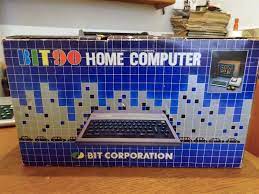
The Bit 90 is a rare 8-bit home computer manufactured by Bit Corporation of Taiwan, released in 1983–1984. It is essentially a ColecoVision with a full keyboard and BASIC programming language — making it both a home computer and a ColecoVision game console in one unit.
The Bit 90 features a ColecoVision-compatible cartridge slot that accepts standard ColecoVision game cartridges directly. It shares the same core hardware: the Zilog Z80 CPU, a Texas Instruments TMS9918-family VDP, and the SN76489 sound chip. The built-in Bit90 BASIC 3.1 turns it into a capable home computer with dedicated BASIC keys on the keyboard for quick command entry.
The computer bears a striking resemblance to the Sega SC-3000, which shares the same TMS VDP family. While not compatible with the SC-3000, both machines represent the same era of Z80/TMS9918-based home computing. Available in at least two color variants: white with black keys and silver/gray with green keys.
An optional Atari VCS/2600 cartridge adapter was also sold separately, mirroring the ColecoVision’s own Expansion Module #1 capability. Bit Corporation was reportedly involved in the development of the original ColecoVision project, which may explain the deep hardware compatibility.
⌨Full KeyboardRubber keyboard with dedicated BASIC instruction keys, similar to the ZX Spectrum. 🎮CV Cartridge PortColecoVision-compatible cartridge slot plays standard CV game cartridges directly. 💻BASIC 3.1Built-in Bit90 BASIC 3.1 in 24K ROM. Full programming environment with graphics and sound. 🔌Expansion BusRear expansion port supports RAM packs, disk drive, Centronics printer, and RS-232C. 🕹Dual Joystick PortsTwo joystick ports for ColecoVision-compatible controllers. 📼Tape StorageAudio/tape port for saving and loading BASIC programs via standard cassette recorder.
TECHNICAL SPECIFICATIONS
| Manufacturer | Bit Corporation (Taiwan) |
| Model | Bit 90 Home Computer |
| Origin | Taiwan (some sources list South Korea) |
| Year | 1983 (Old-Computers.com) / 1984 (Retroinformatica.net) |
| CPU | Zilog Z80 (Z8400A) — 3.6 MHz (PAL) or 3.85 MHz (NTSC). Discrepancy likely due to PAL/NTSC timing. |
| Video Display Processor | TMS9929 (PAL) or TMS9118 (NTSC) |
| Resolution | 256 × 192 pixels, 16 colors, 32 sprites (4 per scanline) |
| Sound | Texas Instruments SN76489 — 3 tone + 1 noise channel |
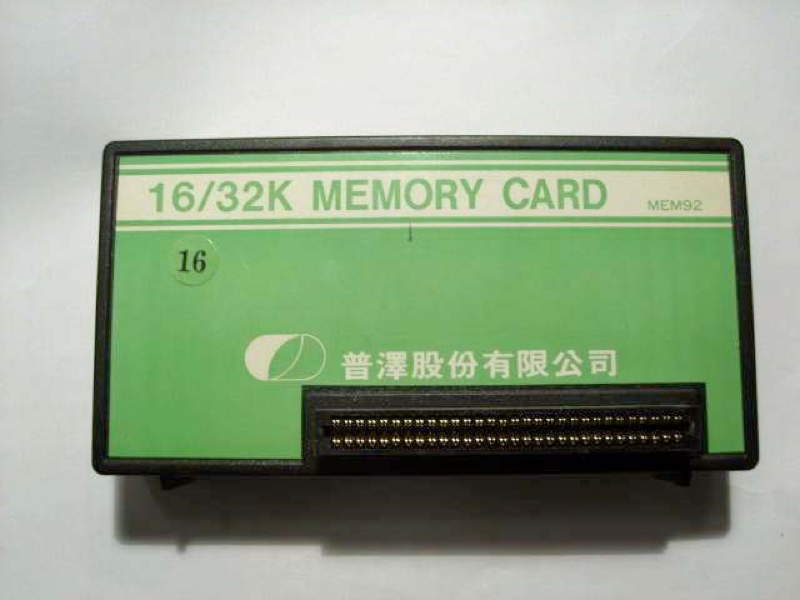
| RAM | 2 KB base (TMM2016AP). Expandable via expansion bus. 16 KB RAM pack minimum for BASIC programming. |
| VRAM | 16 KB (AM9016 × 8 chips) |
| ROM | 24 KB — BIOS + Bit90 BASIC 3.1 interpreter |
| Text Mode | 32 × 24 chars (NTSC v3.0) / 30 × 24 chars (PAL v3.1) |
| Built-In Language | Bit90 BASIC 3.1 (unique, not Microsoft BASIC) |
| Keyboard | Full rubber keyboard with BASIC, CTRL, FCTN, symbol keys |
| Video Output | RF or Composite Video (NOT RGB despite some docs) |
| Cartridge Slot | 1 × ColecoVision-compatible |
| Controller Ports | 2 × joystick (ColecoVision compatible) |
| Expansion | Rear 50-pin bus: RAM packs, disk drive, printer, RS-232C |
| Tape Port | Audio cassette load/save |
| Power | External power supply |
KEYBOARD & BASIC PROGRAMMING
The Bit 90 features a full rubber keyboard reminiscent of the ZX Spectrum. A unique BASIC key allows direct entry of BASIC instructions with a single key press — each key has a command printed on it, entered via BASIC/CTRL/FCTN modifier combinations.
BASIC 3.1 Features Unique Bit90 BASIC (not Microsoft BASIC) 24 KB ROM with BIOS + interpreter Graphics commands for sprite/tile manipulation Sound commands for SN76489 tone generation Tape load/save for program storage Single-precision floating point (4 bytes) CALL command for machine language subroutines Keyboard Layout Full QWERTY alphanumeric layout Dedicated BASIC key for quick command entry CTRL, FCTN, and Symbol modifier keys Graphic characters printed on key faces Rubber key construction (ZX Spectrum style) Cursor keys function as Joystick 0 Development Note Modern developers can target the Bit 90 using the z88dk C compiler with -subtype=bit90. BBC BASIC for Z80 has also been ported to this platform.
PORTS & CONNECTIONS
Front / Top ColecoVision-compatible cartridge slot Full rubber keyboard Controller Ports 2× joystick ports (ColecoVision compatible) Rear Panel 50-pin expansion bus edge connector RF video output Composite audio/video output Audio/tape cassette port DC power connector Expansion Bus Supports RAM expansion packs (16 KB+) Disk drive interface Centronics parallel printer interface RS-232C serial interface Atari VCS/2600 cartridge adapter
AVAILABLE PERIPHERALS
| RAM Expansion | 16 KB+ memory module. Required for BASIC. Plugs into rear expansion bus. |
| Disk Drive | Floppy disk drive with controller interface for expansion bus. |
| Printer | Bit Corporation Bit 90 thermal printer via Centronics parallel interface. |
| RS-232C Interface | Serial communications adapter for modem/terminal use. |
| Atari 2600 Adapter | Plays Atari VCS/2600 cartridges. Similar to ColecoVision Expansion Module #1. |
| Cassette Recorder | Standard audio cassette recorder via tape port. Not proprietary. |
COLECOVISION COMPATIBILITY
The Bit 90 plays standard ColecoVision cartridges directly. The hardware is fundamentally the same — same CPU, VDP, and sound chip families. Key differences:
What Works Standard ColecoVision game cartridges (most titles) ColecoVision-compatible joystick controllers Atari 2600 games via optional adapter ColecoVision homebrew cartridges (standard titles) What Does NOT Work Coleco ADAM software ColecoVision Expansion Module #3 (ADAM) Super Game Module (SGM) enhanced games ColecoVision expansion port modules (different interface)
COLECOVISION vs. BIT 90
| Feature | ColecoVision (1982) | Bit 90 (1983/84) |
|---|---|---|
| CPU | Z80A @ 3.58 MHz | Z80 @ 3.6/3.85 MHz |
| VDP | TMS9928A (NTSC) | TMS9118 (NTSC) / TMS9929 (PAL) |
| Sound | SN76489 | SN76489 |
| RAM | 1 KB | 2 KB (expandable) |
| VRAM | 16 KB | 16 KB |
| ROM | 8 KB (BIOS) | 24 KB (BIOS + BASIC) |
| Keyboard | No | ✔ Full keyboard |
| BASIC | No | ✔ Bit90 BASIC 3.1 |
| CV Cart Slot | ✔ | ✔ Compatible |
| Expansion | Front (CV modules) | Rear (proprietary bus) |
| Tape Storage | No | ✔ Cassette |
| Disk Drive | No (ADAM only) | ✔ Via expansion |
| Video Output | RF | RF + Composite |
| Atari 2600 | Via Exp. Module #1 | Via optional adapter |
| Type | Game Console | Home Computer + Console |
HISTORY & CONTEXT
1982Bit Corporation founded in Taiwan. Begins publishing Atari 2600 games and producing clone hardware. ColecoVision launches in North America. 1983Bit Corporation releases the Bit 60, an Atari 2600 clone. The Bit 90 development begins, leveraging ColecoVision-compatible hardware with keyboard and BASIC. 1983–1984The Bit 90 is released in Taiwan (and possibly South Korea). Available in white/black and silver/green color variants. The North American video game crash limits western distribution. 1984Bit Corporation continues development of ColecoVision/SG-1000 compatible hardware, leveraging shared Z80/TMS9918 architecture. This expertise will lead to the DINA 2-in-1 in 1986. PresentThe Bit 90 is considered one of the rarest ColecoVision-compatible systems. Working units are extremely scarce, with most surviving examples in the hands of dedicated collectors. A GitHub project by a former Bit 90 owner documents the hardware and has ported BBC BASIC to the platform.
PHOTO GALLERY
Bit 90 Computer
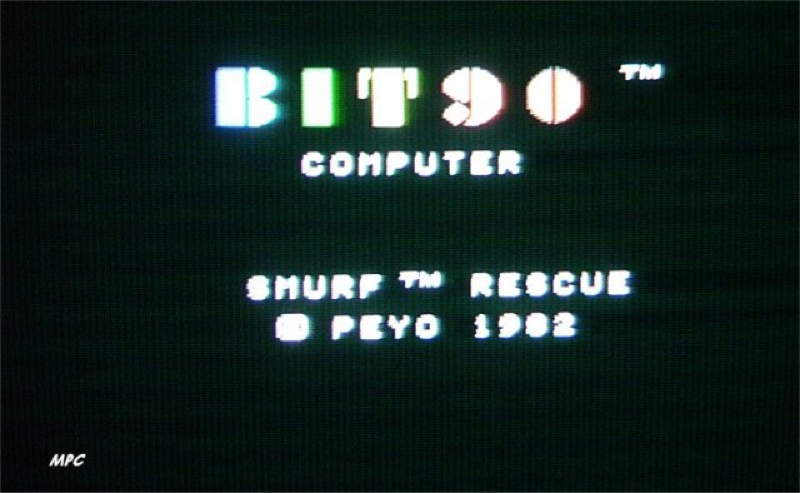 Running Smurf (ColecoVision)
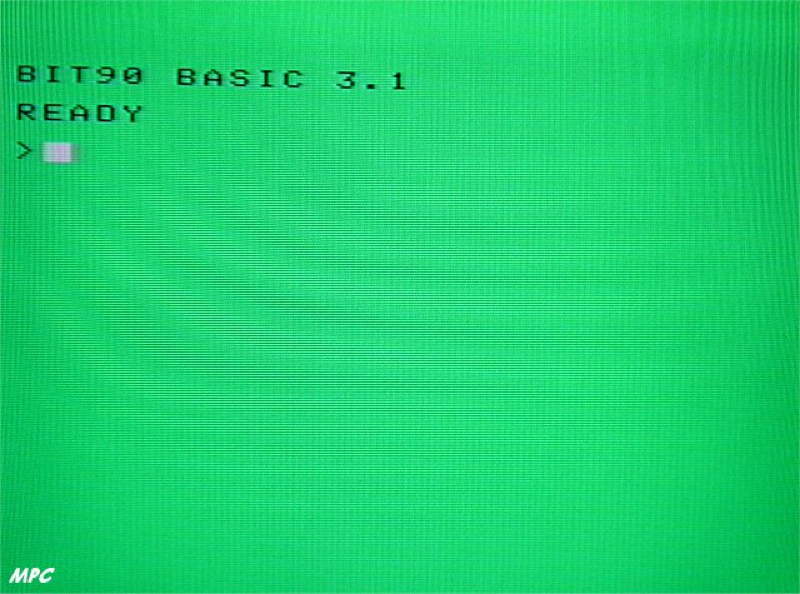 BASIC 3.1 Programming
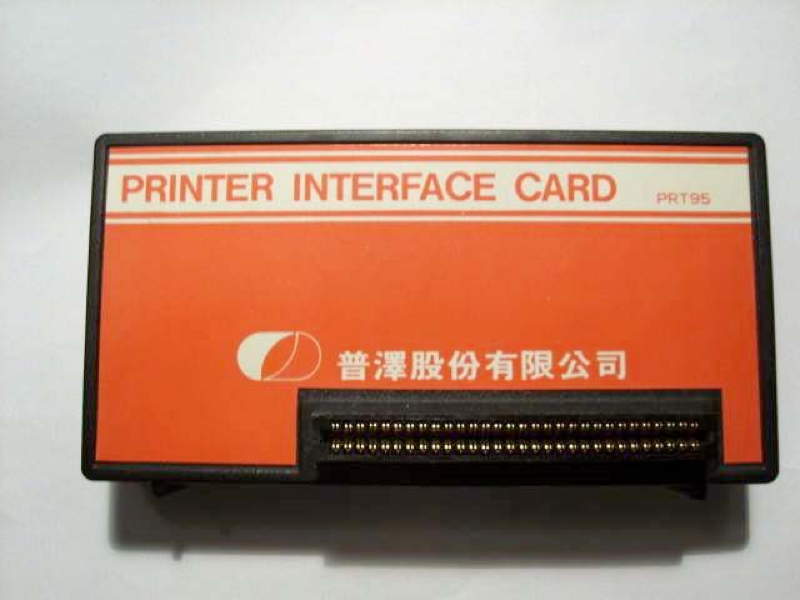 Bit 90 Thermal Printer
 Complete Bit 90 System
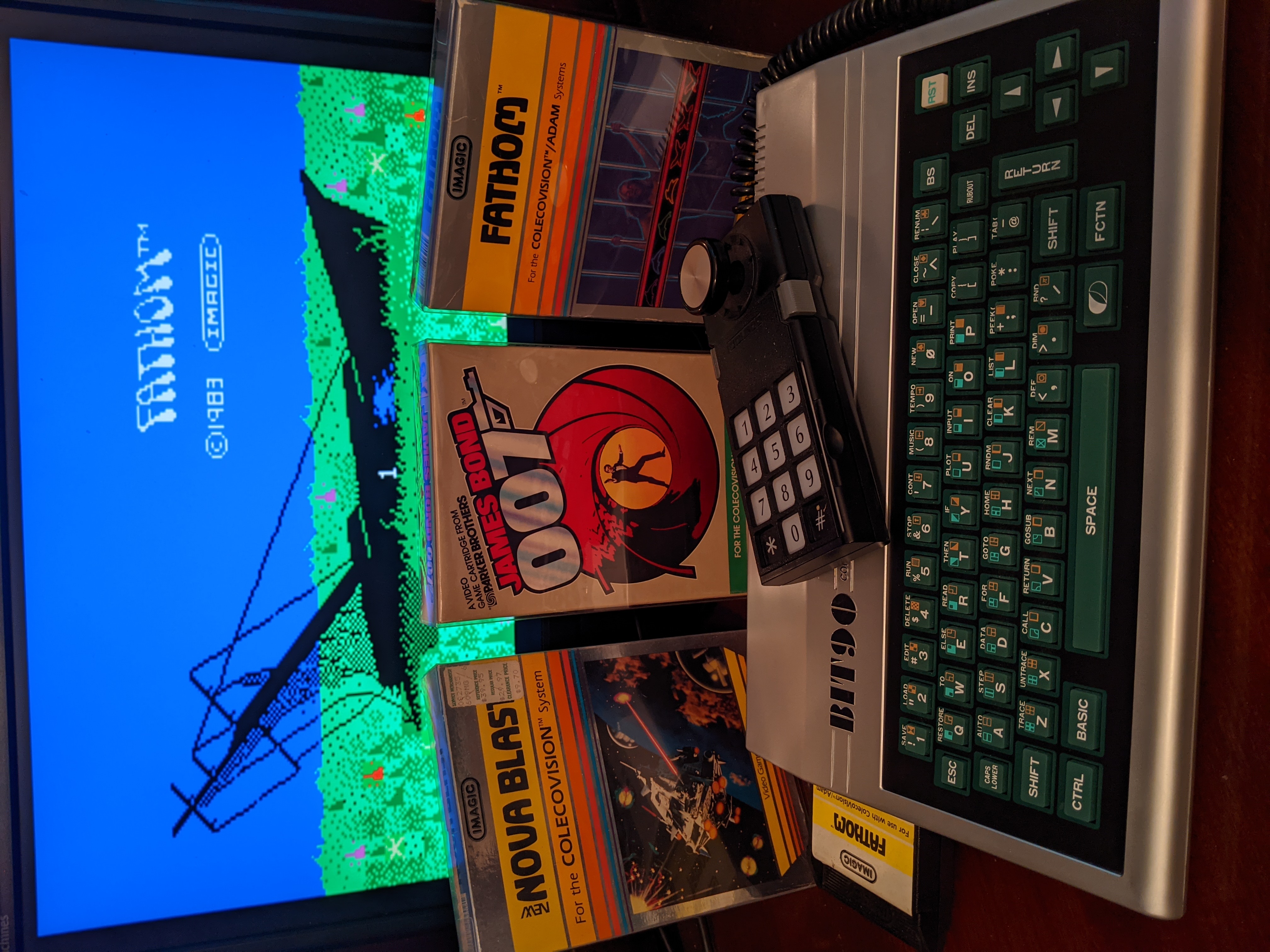 Bit 90 with Accessories
RESOURCES & LINKS
OLD-COMPUTERS.COM MSX WIKI ENTRY GITHUB: BIT90 PROJECT HOME COMPUTER MUSEUM DOWNLOAD MANUAL DOWNLOAD FLYER WATCH VIDEO ← BACK TO CV CLONESColecoVision™ is a trademark of its respective owner. All product names and trademarks are property of their respective owners. Historical information compiled for preservation and educational purposes.
From the archived colecovisionadam.com (DiRoccoVision): original page.